
Turning Back the Clock: Effective Andropause Treatments
Why Understanding Andropause Treatment Options Matters

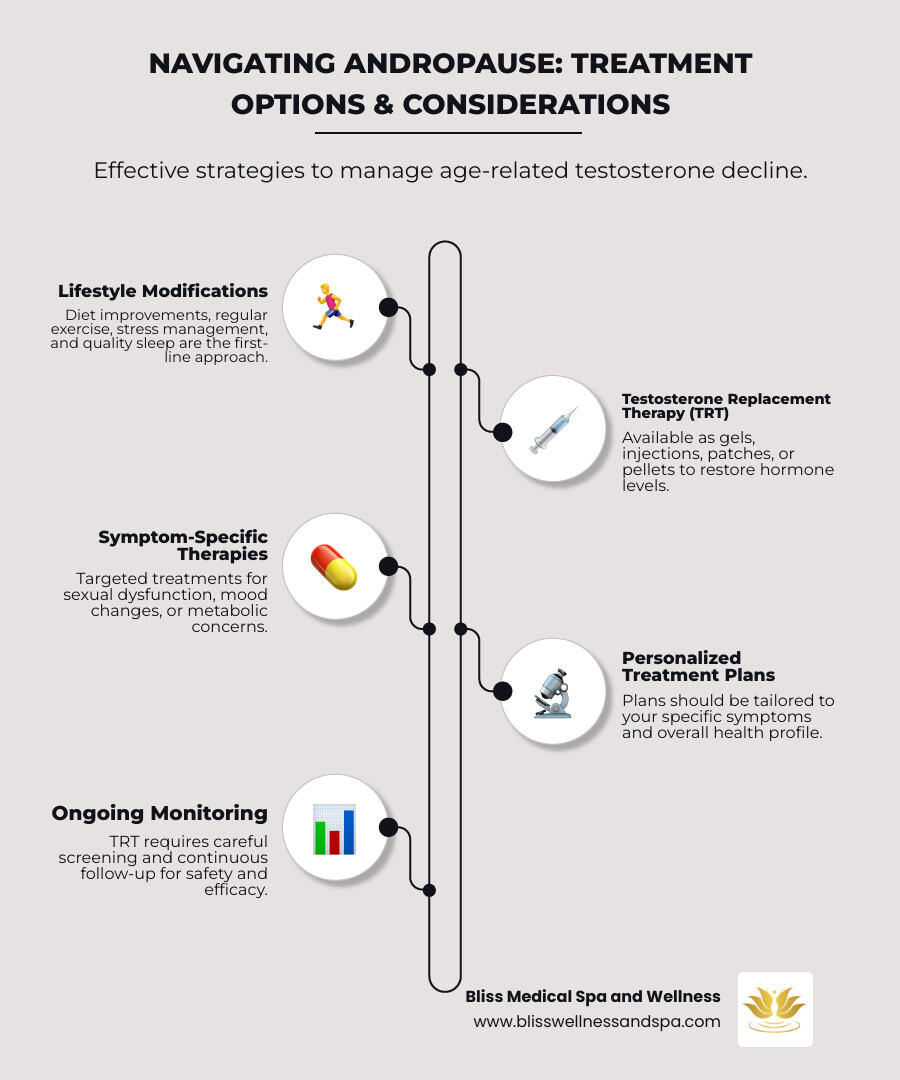
Andropause treatment options range from lifestyle changes to medical interventions, offering men effective ways to manage age-related testosterone decline. Here's what you need to know:
Primary Treatment Categories:
- Lifestyle modifications - Diet improvements, regular exercise, stress management, and quality sleep (first-line approach)
- Testosterone Replacement Therapy (TRT) - Available as gels, injections, patches, or pellets to restore hormone levels
- Symptom-specific therapies - Targeted treatments for sexual dysfunction, mood changes, or metabolic concerns
Key Considerations:
- Most men see benefits from healthier lifestyle choices alone
- Medical treatments work best when combined with lifestyle changes
- TRT requires careful screening and ongoing monitoring
- Treatment plans should be personalized to your specific symptoms and health profile
If you're experiencing fatigue, decreased libido, mood changes, or loss of muscle mass, you're not alone. Testosterone levels naturally decline about 1% per year after age 30, and by their 60s, approximately 20% of men show signs of low testosterone. The good news? These changes don't have to define your quality of life.
The journey through andropause can feel isolating, but effective solutions exist. Whether it's the man who tells his wife, "I've got my old husband back again!" after treatment, or the executive who regains the energy to power through his workday, the right approach can restore vitality and confidence.
I'm Dawn Dewane, a board-certified Family Nurse Practitioner specializing in hormone optimization at Bliss Medical Spa and Wellness in Phoenix. With my background spanning Medical-Surgical, Hematology/Oncology, and advanced wellness care, I've helped countless men steer andropause treatment options to reclaim their energy, strength, and overall well-being. My approach combines clinical precision with a deep understanding of how hormonal balance impacts every aspect of your life.
Understanding Andropause: More Than Just Getting Older
The term "male menopause" often gets thrown around, but medically speaking, it's more accurately referred to as late-onset hypogonadism or age-related low testosterone. While it's a popular term, it's a bit of a misnomer because, unlike female menopause, it doesn't involve a complete shutdown of reproductive organs or a dramatic, abrupt drop in hormones. Instead, it’s a gradual process.
According to the Mayo Clinic, testosterone levels tend to decline an average of 1 percent per year after men turn 30. This slow, steady reduction in testosterone, along with changes in other hormones, can lead to various physical, emotional, and sexual symptoms. Not all men will experience andropause, and its onset and severity can vary greatly.
You can learn more about this gradual process and its differences from female menopause in this scientific research on male menopause.
How Andropause Differs from Female Menopause
The key distinction lies in the gradual nature of andropause versus the more abrupt and universal experience of female menopause. In women, hormone production falls dramatically over a short time, marking the end of their reproductive years. For men, testosterone production decreases over many years, and not every man experiences significant symptoms, nor does it mean an end to fertility. While sexual complications can arise, it's not a complete cessation of reproductive function.
Primary Causes of Low Testosterone in Aging Men
While aging is the primary driver of declining testosterone levels, it's not the only factor. Low testosterone can stem from two main categories:
- Primary Hypogonadism: This occurs due to issues directly with the testicles, which produce testosterone. Congenital causes can include conditions like Klinefelter's syndrome or undescended testicles. Acquired causes might involve testicle injury or removal, infections like orchitis, or the effects of chemotherapy or radiation.
- Secondary Hypogonadism: This type arises from problems in the pituitary gland or hypothalamus in the brain, which signal the testicles to produce testosterone. Congenital causes include conditions like Kallmann syndrome. Acquired causes are more common in aging men and can be influenced by a variety of factors:
- Obesity: Our research highlights that in one study, 30% of overweight men had low testosterone, compared to only 6% of those with normal weight. Excess body fat can increase the conversion of testosterone to estrogen, further lowering available testosterone.
- Diabetes (Type 2): Men with Type 2 diabetes are significantly more likely to experience low testosterone. One study found that 25% of men with Type 2 diabetes had low testosterone, compared to 13% of those without diabetes. This connection can create a vicious cycle, as low testosterone may also worsen insulin resistance.
- Chronic Illnesses: Conditions like hypopituitarism, hyperprolactinemia, iron overload (hemochromatosis), Cushing's syndrome, liver cirrhosis, kidney failure, and HIV/AIDS can all contribute to secondary hypogonadism.
- Medications: Certain drugs, including opioids, glucocorticoids, and some psychoactive medications, can suppress testosterone production.
- Lifestyle Factors: Poorly managed stress, inadequate sleep, and excessive alcohol consumption can also negatively impact testosterone levels.
Recognizing the Symptoms of Andropause
While the decline in testosterone is natural, the symptoms it can cause are anything but pleasant. Recognizing these signs is the first step toward exploring Andropause treatment options. They often overlap with other age-related conditions, making diagnosis challenging, but they can significantly impact quality of life.
Our clinical experience in Phoenix and Glendale shows us that men often describe a general "slowing down" or a loss of their former vitality. Here's a breakdown of common symptoms:
Physical Changes:
- Decreased muscle mass and strength: You might notice it's harder to maintain muscle tone or lift weights as easily as before.
- Increased body fat: Especially around the abdomen, leading to a "dad bod" or "man boobs" (gynecomastia).
- Reduced bone density: This can increase the risk of osteoporosis and fractures, even from minor falls.
- Fatigue and lack of energy: A persistent feeling of tiredness, even after adequate sleep.
- Hot flashes or sweats: Similar to what women experience during menopause, though less common.
- Shrinking testicles or loss of body hair: More rare but can occur.
Sexual Symptoms:
- Low libido (decreased sex drive): A noticeable drop in interest in sexual activity.
- Erectile dysfunction (ED): Difficulty achieving or maintaining an erection.
- Infertility: Low or zero sperm count.
Psychological Symptoms:
- Mood swings and irritability: Feeling easily frustrated or moody.
- Depression and decreased motivation: A general sense of sadness, hopelessness, or lack of drive.
- Lowered self-confidence: Doubts about personal abilities or attractiveness.
- Difficulty concentrating and memory issues (brain fog): Struggling to focus or recall information.
- Insomnia and sleep disturbances: Trouble falling or staying asleep.
The Path to Diagnosis in Phoenix
Diagnosing andropause isn't always straightforward. The gradual nature of testosterone decline and the overlap of symptoms with other health conditions or simply aging itself can make it tricky. This is why a comprehensive evaluation by a specialist in the Phoenix area is so crucial.
The process typically involves:
- Symptom Evaluation: We'll start with a detailed discussion about your symptoms, medical history, and lifestyle. Tools like the Androgen Deficiency in Aging Males (ADAM) questionnaire or the Aging Males' Symptoms (AMS) scale can help quantify your experience. Our internal processes, similar to the MASIÓ score mentioned in our research, allow us to track your symptoms carefully. The biggest hurdle, as some research points out, can be men's reluctance to discuss sensitive topics like sexual health, but we assure you, our environment at Bliss Medical Spa and Wellness is one of trust and confidentiality.
- Blood Tests: If your symptoms suggest low testosterone, we'll order blood tests to measure your hormone levels.
- Total Testosterone Levels: This is the most common initial test. However, our research indicates that relying solely on total testosterone can lead to missed diagnoses, as "normal" ranges are very broad and can vary. There's a lack of agreement as to what constitutes a “normal” level of serum testosterone.
- Role of Bioavailable Testosterone: Most testosterone in your blood is bound to proteins. Only a small percentage is "free" or "bioavailable," meaning it's available for your body to use. As men age, levels of Sex Hormone-Binding Globulin (SHBG) tend to increase, binding more testosterone and reducing the amount that's actually usable. Measuring bioavailable testosterone can give a more accurate picture of what your body is truly experiencing.
- Importance of Morning Blood Draws: Testosterone levels fluctuate throughout the day, peaking in the early morning. To get the most accurate reading, we'll typically schedule your blood draw between 7 a.m. and 10 a.m. after an overnight fast.
A low testosterone level on its own isn't always enough for a diagnosis. We look for a clear correlation between your symptoms and persistently low levels. If the first test shows low testosterone, we often recommend repeating it to confirm the results.
Foundational and Advanced Andropause Treatment Options
At Bliss Medical Spa and Wellness, we believe in a holistic and personalized approach to managing andropause. There's no one-size-fits-all solution, and the most effective strategies often combine lifestyle adjustments with medical interventions. Think of it as building a strong house: lifestyle changes are the foundation, and medical treatments are the specialized tools that fine-tune and strengthen the structure. Our goal is always to help you achieve optimal health and vitality, not just to reach "normal" lab values.
Lifestyle Changes: The First Step in Andropause Treatment Options
Before considering medical therapies, we always emphasize the power of lifestyle modifications. These are often the most common and effective Andropause treatment options and can significantly improve symptoms and overall well-being.

- Nutrition for Hormone Balance: A healthy diet is fundamental. Focus on whole, unprocessed foods, lean proteins, healthy fats (like avocados and nuts), and plenty of fruits and vegetables. Limiting sugar, refined carbohydrates, and unhealthy fats can help manage weight and improve insulin sensitivity, both of which positively impact testosterone levels. We often discuss specific nutritional strategies custom to your needs during your consultations here in Phoenix.
- Stress Reduction Techniques: Chronic stress lifts cortisol, which can suppress testosterone production. Incorporate stress-reducing activities into your daily routine, such as meditation, yoga, spending time in nature (perhaps a hike in the beautiful Arizona desert!), or engaging in hobbies you enjoy.
- Importance of Sleep: Quality sleep is vital for hormone production. Aim for 7-9 hours of uninterrupted sleep per night. Establish a regular sleep schedule and create a relaxing bedtime routine.
- Regular Exercise: Physical activity is a potent testosterone booster.
- Strength Training: Incorporate weightlifting or resistance training 2-3 times per week. This helps build and maintain muscle mass, which is directly linked to higher testosterone levels.
- Cardiovascular Health: Regular aerobic exercise, like brisk walking, running, or cycling, supports overall health, weight management, and can improve cardiovascular function, which is essential for healthy hormone regulation.
- Limiting Alcohol: Excessive alcohol consumption can negatively impact testosterone production. Moderation is key.
These lifestyle adjustments are powerful on their own, and for many men, they are the most common type of treatment for symptoms of male menopause, providing significant relief.
Exploring Medical Andropause Treatment Options
While lifestyle changes form the bedrock, sometimes they aren't enough to adequately manage symptoms, especially if testosterone levels are significantly low. This is where medical Andropause treatment options come into play, primarily Testosterone Replacement Therapy (TRT).
TRT, however, can be very controversial, and approach it with careful consideration and under expert medical guidance. Different medical societies offer varying recommendations:
- Endocrine Society (2018 Recommendations): This leading organization recommends testosterone therapy for men with age-related low testosterone who have symptoms related to low testosterone. They also suggest offering it to men with age-related low testosterone who have no symptoms, though this is a more debated point. Their guidelines emphasize the importance of using accurate assays for testosterone measurement and careful monitoring.
- American College of Physicians (2020 Recommendations): The ACP takes a more cautious stance, recommending that healthcare professionals think about starting testosterone treatment in men with sexual dysfunction who wanted to improve their sexual function, after explaining the risks and benefits. They do not suggest testosterone treatment for improving energy, vitality, physical function, or cognition in men with age-related low testosterone, citing low-certainty evidence for these benefits.
When TRT is considered, the primary goals are:
- Improving Sexual Function: This is often the most significant and consistent benefit seen with TRT, particularly for issues like low libido and erectile dysfunction. Our research highlights that the ACP's conditional recommendation for TRT specifically targets the improvement of sexual function.
- Alleviating Other Symptoms: For others, TRT can ease bothersome symptoms like fatigue, low mood, decreased muscle mass, and reduced bone density. However, as the ACP notes, the benefits for these symptoms might be less clear or supported by lower-certainty evidence.
Replacing testosterone in the blood is the most common treatment for men going through andropause, but the risks and benefits must be carefully considered before starting therapy.
A Deep Dive into Testosterone Replacement Therapy (TRT)
Testosterone Replacement Therapy (TRT) serves as a primary medical intervention for men experiencing symptomatic low testosterone. Our aim at Bliss Medical Spa and Wellness, whether you visit us in Phoenix or Glendale, is to restore your testosterone levels to an optimal range, which often means the upper quartile of what's considered "normal" for healthy young men, rather than just barely meeting the minimum threshold. This individualized approach is key to achieving the best possible outcomes.
You can find more info about Bioidentical Hormone Optimization and our approach here: More info about Bioidentical Hormone Optimization
Weighing the Pros and Cons of Testosterone Replacement Therapy
Deciding on TRT is a significant step, and it involves a thorough discussion of potential benefits against potential risks.
Potential Benefits:
- Improved Libido and Sexual Function: Numerous studies show that TRT can significantly improve sex drive and improve erectile function in men with low testosterone. The Endocrine Society's guidelines note a small but statistically significant improvement in libido, erectile function, sexual activity, and satisfaction.
- Increased Muscle Mass and Strength: Testosterone is anabolic, meaning it helps build muscle. TRT can lead to increased lean body mass and muscle strength, which can be particularly beneficial for older men.
- Better Mood and Energy: Men often report improvements in mood, a reduction in depressive symptoms, increased motivation, and higher energy levels.
- Improved Bone Density: Testosterone plays a crucial role in bone health. TRT can help increase bone mineral density, reducing the risk of osteoporosis and fractures.
- Improved Cognition: While the evidence is less certain, some men experience improvements in concentration and cognitive function.
- Other Benefits: TRT can also lead to a reduction in body fat, improved insulin sensitivity (especially in men with Type 2 diabetes), and can help correct mild anemia.
Potential Risks and Necessary Monitoring: While TRT can be transformative, it's not without potential downsides. Our research indicates that hormone replacement therapy is controversial, and potential risks must be carefully managed:
- Prostate Health Screening and Monitoring: This is a major concern. Before starting TRT, a thorough urologic evaluation is essential, including a Digital Rectal Exam (DRE) and a Prostate-Specific Antigen (PSA) blood test.
- The Endocrine Society recommends a urological consultation if PSA levels are >4 ng/mL or >3 ng/mL in men at high risk for prostate cancer.
- During therapy, PSA levels and DREs must be monitored regularly. If PSA increases significantly (e.g., >1.4 ng/mL above baseline or >4.0 ng/mL) within the first year, a urological consultation is recommended.
- TRT is contraindicated in men with known prostate cancer.
- Cardiovascular Concerns: This is one of the most debated areas. Some studies have linked TRT to an increased risk of cardiovascular events (heart attack and stroke), leading to FDA warnings. However, other studies show no increased risk, and some even suggest that normalizing testosterone levels might reduce cardiovascular risk. The ACP guideline highlights that evidence on adverse cardiovascular events shows a small increase to no difference, and mortality data is inconclusive. We always engage in a thorough discussion about these risks, especially for men with pre-existing heart conditions.
- Polycythemia: TRT can increase red blood cell count (hematocrit), leading to thicker blood, which can raise the risk of blood clots. Regular monitoring of hematocrit levels is essential, and if it gets too high, the dose may need adjustment or therapy paused.
- Sleep Apnea: TRT can sometimes worsen pre-existing sleep apnea. If you have untreated severe obstructive sleep apnea, TRT is generally contraindicated.
- Fluid Retention: Some men may experience mild fluid retention, leading to swelling in the ankles or feet.
- Gynecomastia: In rare cases, testosterone can convert to estrogen, leading to breast tenderness or enlargement.
- Skin Reactions: Transdermal applications (gels, patches) can sometimes cause skin irritation or rashes.
- Fertility: TRT can suppress sperm production, making it unsuitable for men planning near-term fertility.
Comparing Testosterone Therapy Formulations
The good news is that there are several effective ways to administer testosterone, each with its own advantages and considerations regarding efficacy, safety, convenience, and cost. Our goal is to find the best fit for your lifestyle and health goals.
Here's a comparison of common TRT formulations:
| Formulation | Description | Efficacy & Safety A. The easiest to administer are the transdermal gels and, except for their cost, these are the preferred modality of therapy today. They offer a steady absorption of testosterone through the skin, avoiding the peaks and troughs seen with injections. Patients often find them convenient and easy to apply daily. * Injections: Testosterone esters (e.g., cypionate or enanthate) are typically injected intramuscularly every 1 to 4 weeks. These are generally the most cost-effective option. While effective, they can lead to fluctuating testosterone levels, with some men experiencing a "rollercoaster" effect of high energy after the injection followed by declining energy and symptoms before the next dose. The ACP suggests considering intramuscular formulations over transdermal ones due to lower costs and similar clinical effectiveness and harms, especially for improving sexual function. * Patches: Transdermal patches deliver testosterone through the skin, similar to gels, but are worn for 24 hours. They provide a more consistent release than injections but can cause skin irritation. Scrotal patches, while effective, can lead to very high levels of dihydrotestosterone due to the specific enzymes in scrotal skin. * Pellets: Small testosterone pellets are implanted under the skin, typically in the hip or buttock, and release testosterone slowly over several months (3-6 months). This offers maximum convenience and steady levels, but the procedure requires a minor surgical insertion and removal. * Oral Capsules: Oral testosterone undecanoate is available, but its absorption is highly dependent on food intake (requiring meals with 15-20 grams of fat). Other older oral forms have been linked to liver toxicity and are generally not recommended. * Nasal Gels: These are newer formulations applied inside the nostrils, offering a rapid absorption. They are convenient but can cause rhinitis (nasal irritation).
When choosing among these Andropause treatment options, we consider factors like your lifestyle, preference for daily application versus less frequent procedures, potential side effects, and budget. For example, while transdermal gels are often preferred for their ease of administration, injectable forms can be significantly more cost-effective. Patient satisfaction with different TRT methods varies; some prefer injections for lower cost, while others prioritize the convenience and ease of use of topical gels.
When to Seek Help for Andropause
It's important to reiterate that a natural decline in testosterone is a normal part of aging. Many men experience some symptoms of andropause, and these are often manageable with lifestyle changes alone. However, if your symptoms are causing significant hardship, impacting your quality of life, or making you say, "I'm just not myself anymore," then it's definitely time to seek medical advice.
When to Consult a Medical Professional:
- Persistent and bothersome symptoms: If you're consistently experiencing low energy, severe fatigue, significant mood changes (like depression or irritability), noticeable loss of muscle mass, increased body fat, or disruptive sexual dysfunction.
- Symptoms impacting daily life: If these issues are affecting your relationships, work performance, self-confidence, or overall enjoyment of life.
- Concerns about long-term health: If you're worried about conditions like osteoporosis or cardiovascular health, which can be linked to low testosterone.
- Before starting any treatment: Always discuss the potential benefits, harms, and costs of all Andropause treatment options with a qualified healthcare professional. This includes over-the-counter supplements, which may not be regulated or effective.
At Bliss Medical Spa and Wellness, we offer expert care in both Phoenix and Glendale, AZ, for men navigating these changes. Our approach to proactive health management focuses on understanding your unique body and creating a personalized plan to help you age well. We're here to answer your questions, perform thorough diagnostics, and guide you through the best available Andropause treatment options to reclaim your vitality.
Conclusion: Reclaim Your Vitality with Personalized Care
Navigating andropause can feel like a journey into the unknown, but with the right guidance and personalized care, you can turn back the clock and reclaim your vitality. We've explored how understanding the gradual decline of testosterone, recognizing its diverse symptoms, and approaching diagnosis with a comprehensive perspective are crucial first steps.
Lifestyle changes form the powerful foundation of any effective plan. A balanced diet, regular exercise (especially strength training), adequate sleep, and stress reduction are not just good habits—they are potent Andropause treatment options that can significantly improve your well-being. When lifestyle adjustments aren't enough, Testosterone Replacement Therapy (TRT) offers a powerful medical tool to restore hormone balance and alleviate bothersome symptoms.
At Bliss Medical Spa and Wellness, we are dedicated to empowering men in Phoenix and Glendale, AZ, to age well. Our experts combine clinical precision with a warm, supportive approach to develop a custom plan that fits your unique needs and goals. Don't let low testosterone define your later years; let us help you refind your energy, strength, and zest for life.
Consult with Bliss Medical Spa and Wellness experts in Phoenix today and take the first step toward a more vibrant future.
Schedule your andropause consultation today