
Facial for Dry Skin in Glendale, AZ: Restore Your Glow

Dry skin can make your face feel tight, rough, or uncomfortable, even when you apply moisturizer every day. Flaking may become more noticeable around the nose, cheeks, or forehead, and makeup and skincare products may no longer sit as smoothly as they once did.
A professional facial for dry skin can help address surface dryness with gentle cleansing, controlled exfoliation, and targeted hydration. In Glendale, AZ, the dry climate can make moisture retention harder for some skin types, making thoughtful skin care especially important.
At Bliss Wellness and Spa, we select facial treatments based on your skin concerns, sensitivity, current routine, and goals. We don't treat every case of dryness the same way; we choose care that supports healthier-looking, more comfortable skin.
What You'll Learn From This Article
Why facial skin can become dry, flaky, or sensitive
How dry skin differs from dehydrated skin
What happens during a facial designed for dryness
Which ingredients may help support hydration and the skin barrier
What results you can reasonably expect from treatment
How to care for dry skin between appointments
When persistent dryness may need evaluation by a dermatologist
Understanding why your skin feels dry is the first step toward choosing the right treatment rather than simply adding more products.
Why Does Facial Skin Become Dry?
Dry skin develops when the outer layers of the skin do not retain enough water or protective lipids. This can leave the surface feeling tight, rough, flaky, or more sensitive than usual.
Your skin naturally forms a protective barrier that helps hold moisture in and limit exposure to outside irritants. A 2023 review published in Skin Pharmacology and Physiology explains that the skin barrier depends on several closely connected physical, chemical, microbial, and immune functions. When that barrier becomes disrupted, water can escape more easily, and irritation may become more noticeable.
Several everyday factors can contribute to dryness, including:
Low humidity
Hot showers or very hot water
Harsh cleansers
Frequent use of scrubs or exfoliating acids
Retinoids and other active skincare products
Age-related changes in the skin
Certain medications
Some underlying skin conditions
Glendale's dry desert climate can also make moisture loss more noticeable. That does not mean the climate is the only cause, but it can make a consistent skincare routine more important.
Once you know what may be affecting moisture retention, it becomes easier to understand why dry skin and dehydrated skin are not always the same thing.
Dry Skin vs. Dehydrated Skin
People often use the terms interchangeably, but they describe different concerns.
Dry skin generally refers to skin that lacks enough protective oils or struggles to maintain its natural barrier. It may feel rough, flaky, tight, or sensitive.
Dehydrated skin refers more specifically to a lack of water in the skin's outer layers. Dehydration can happen temporarily and may affect oily, combination, or dry skin.
Common Signs of Dry Skin
Dry skin may include:
Rough texture
Visible flakes
Tightness
Increased sensitivity
Dull appearance
Areas that feel uncomfortable after cleansing
Common Signs of Dehydrated Skin
Dehydrated skin may look dull or feel tight even when it also produces oil. Environmental exposure, a harsh skincare routine, and excessive exfoliation may all contribute.
This distinction matters because a heavy lotion is not always the right answer. Treatment should focus on what your skin actually needs, including water, lipids, barrier support, or a gentler routine.
That leads to the next question most patients have: what does a facial actually do for dry skin?
How a Facial for Dry Skin Can Support Hydration
A facial designed for dryness should improve surface comfort without stripping or irritating the skin.
Depending on your skin condition and goals, treatment may include cleansing, light exfoliation, a hydrating serum, and moisturizer. The exact steps should vary based on sensitivity and current skincare use.
Gentle Cleansing
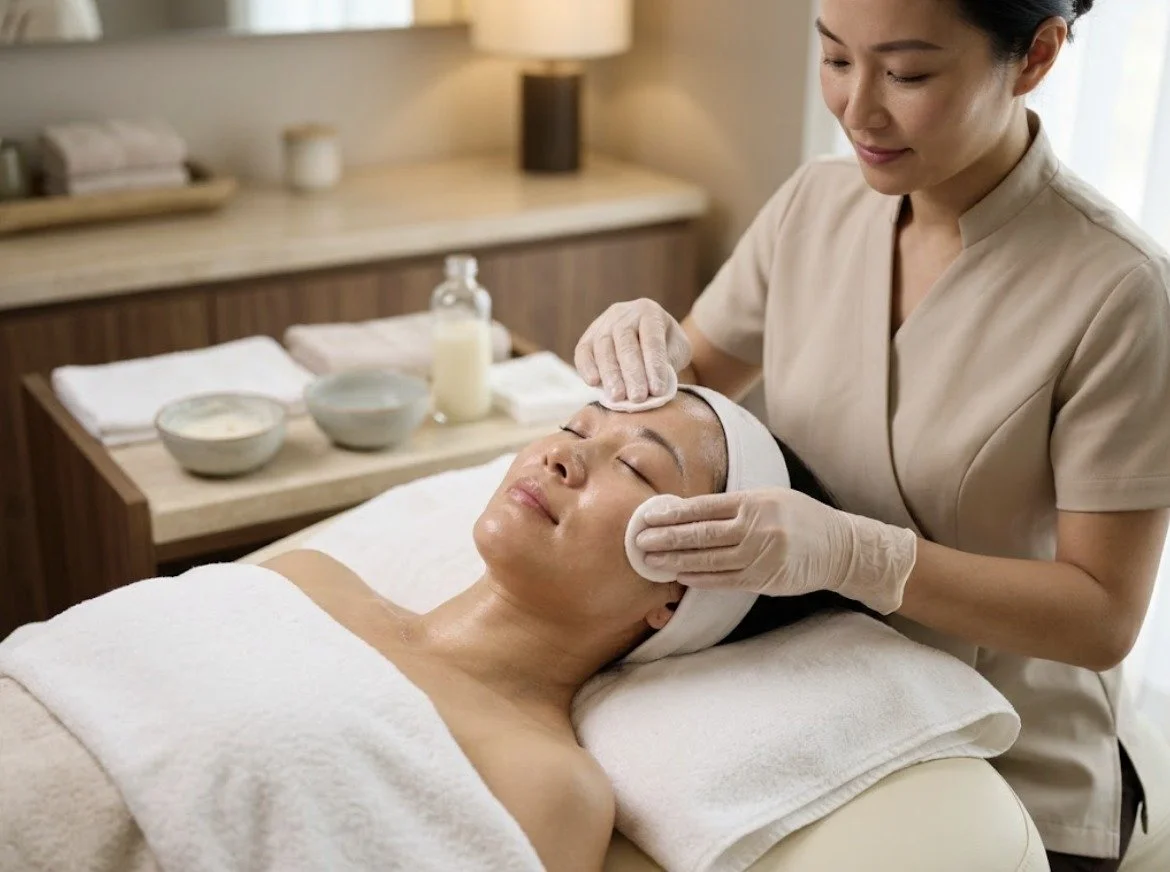
A facial usually begins by removing sunscreen, makeup, excess oil, and surface buildup.
For dry or sensitive skin, aggressive cleansing can worsen tightness. A mild cleanser that respects the skin barrier is often more appropriate than one designed to remove as much oil as possible.
Controlled Exfoliation
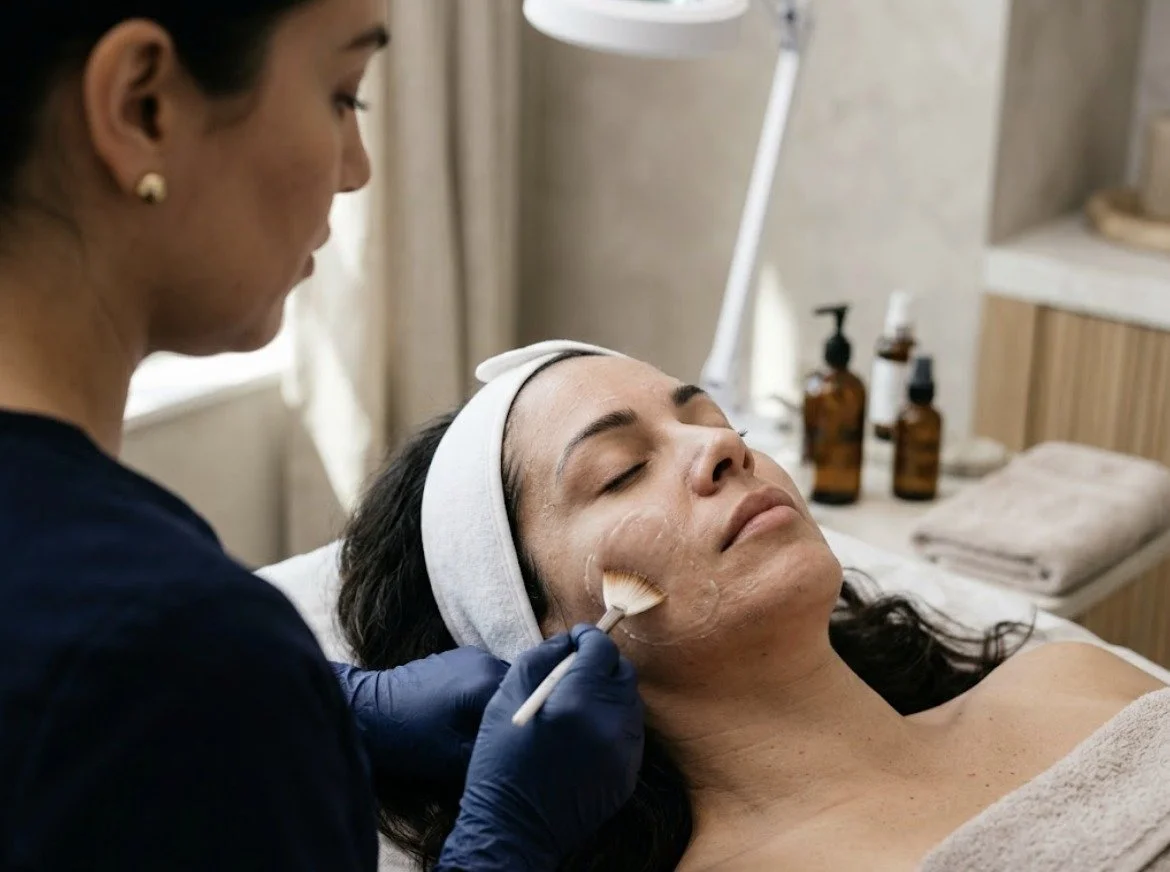
Dryness can lead to a buildup of dead skin cells that makes the surface look dull or flaky.
Gentle exfoliation may help remove some of this buildup and improve skin texture. More exfoliation is not automatically better, especially if the skin barrier already feels irritated.
If someone uses a retinoid, strong acids, or several exfoliating skincare products at home, they may need a more conservative treatment.
Hydrating Serums and Moisturizers
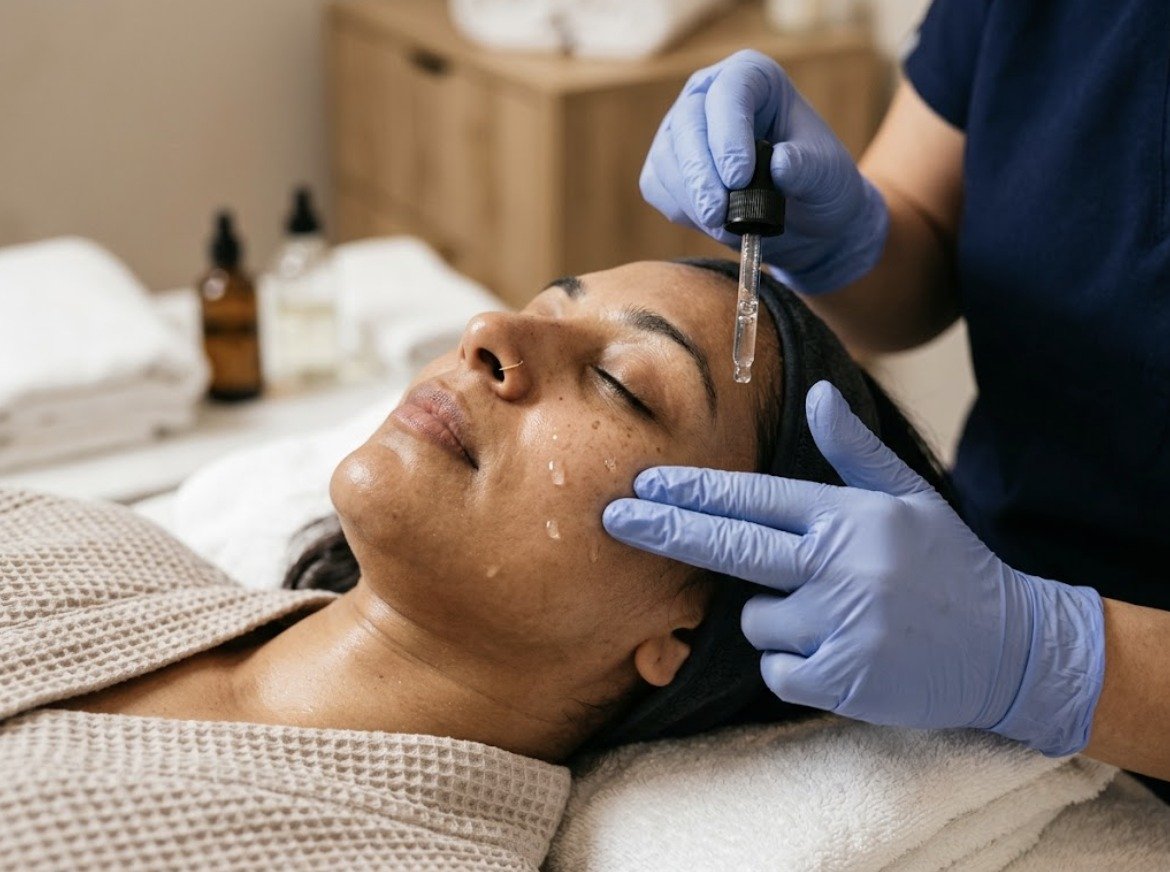
After cleansing and exfoliation, hydrating products can help replenish moisture at the skin surface.
Many products combine different types of ingredients:
| Ingredient Type | How It Supports Dry Skin | Common Examples |
|---|---|---|
| Humectants | Help attract and hold water in the outer skin layers | Hyaluronic acid, glycerin |
| Emollients | Help soften rough areas and smooth the skin surface | Lipids, oils, fatty acids |
| Occlusives | Help reduce moisture loss from the surface | Petrolatum, mineral oil |
A review of moisturizers used for dry skin discusses how different formulations can support moisture retention and barrier function in different ways.
With those basics in mind, the next step is understanding what a professional facial appointment may look like.
What Happens During a Hydrating Facial at Bliss in Glendale?
A facial should begin with a skin assessment rather than a standard treatment applied the same way to every patient.
At Bliss Wellness and Spa, the treatment plan can account for your current dryness, sensitivity, home skincare routine, and aesthetic goals.
Skin Assessment
Before treatment, your provider may ask about:
Areas of dryness or flaking
Skin sensitivity
Current cleanser and moisturizer
Retinoid or acid use
Recent facials or aesthetic treatments
Known skin conditions
Your main skin concerns
This information helps determine how much exfoliation your skin may tolerate and which hydrating products make sense.
Cleansing, Exfoliation, and Hydration
A typical hydrating facial may include cleansing followed by carefully selected exfoliation and moisture support.
When appropriate, a hydrating serum like hyaluronic acid may be used. A moisturizer can then help soften the surface and reduce moisture loss.
The exact products and steps can differ by skin type. Sensitive skin may require less exfoliation, while someone with mild surface buildup may tolerate a more active approach.
When Another Treatment May Make Sense
Some patients may be better suited for a treatment that combines exfoliation with additional skin care steps.
Bliss offers treatments such as DiamondGlow, which may be considered depending on the patient's skin concerns and provider assessment. This type of treatment should not automatically be viewed as better than a traditional facial. The right choice depends on your skin.
A small 2008 clinical study evaluated a hydradermabrasion protocol that combined crystal-free microdermabrasion with pneumatic application of an antioxidant serum. The researchers reported measurable improvements in several skin parameters among the treatment group, but the study involved only 20 women and examined a specific treatment protocol.
That limitation is important because results from one procedure cannot be applied to every facial, serum, or exfoliation method.
Which Ingredients Can Help Dry Facial Skin?
The best skincare routine for dryness is often simpler than people expect.
Rather than layering many products, focus on ingredients that support hydration and reduce water loss.
Hyaluronic Acid
Hyaluronic acid is a humectant commonly found in hydrating serums and moisturizers.
It helps attract and hold water within the outer layers of the skin. For people with dry skin, it may work best when paired with a moisturizer that also contains ingredients that help keep that moisture from escaping.
Glycerin
Glycerin is another common humectant. It helps support water content in the outer skin layers and appears in many cleansers, lotions, serums, and moisturizers.
Emollients and Occlusives
Emollients help smooth rough skin, while occlusive ingredients form a surface layer that slows water loss.
A moisturizer may combine humectants, emollients, and occlusives rather than relying on a single ingredient.
If your skin is also sensitive, fragrance, strong acids, or aggressive scrubs may make dryness worse. Choose products based on how your skin responds, not simply how many active ingredients a formula contains.
Understanding the ingredients is helpful, but treatment expectations matter just as much.
What Results Can You Expect From a Facial for Dry Skin?

A well-chosen facial may leave dry skin feeling softer, smoother, and more hydrated.
Some people notice less visible flaking or a fresher appearance after treatment. Others may need changes to their daily skincare routine before they notice consistent improvement.
Possible short-term changes may include:
Softer skin
Smoother texture
Less noticeable surface flaking
Improved comfort
A more hydrated appearance
Results vary because dryness can have many causes. Your baseline skin condition, treatment choice, environmental exposure, current products, and home care can all influence how your skin responds.
A facial also does not correct every reason skin becomes dry. If an underlying dermatologic condition is present, cosmetic treatment alone may not address the cause.
For that reason, ongoing care between appointments can be just as important as the facial itself.
How Often Should You Get a Facial for Dry Skin?
There is no universal schedule for dry skin facials.
Some patients choose appointments every several weeks as part of their regular skincare routine. Others may only schedule treatment seasonally or when dryness becomes more noticeable.
Your ideal frequency can depend on:
Skin type
Sensitivity
Type of facial
Amount of exfoliation used
Current skincare products
Use of retinoids or acids
Personal goals
How your skin responded to the previous treatment
More frequent treatment is not always better. If your skin begins to feel increasingly sensitive, tight, or irritated, additional exfoliation may be counterproductive.
Your provider can adjust the treatment schedule based on how your skin responds over time, while your home routine helps maintain hydration between visits.
How to Care for Dry Skin Between Facial Appointments
A facial can support hydration, but daily skin care helps protect those results.
Choose a Gentle Cleanser
Use a cleanser that removes sunscreen, makeup, and debris without leaving your face feeling stripped.
Hot water can also worsen dryness for some people, so lukewarm water is usually gentler.
Moisturize Consistently
Do not wait until your skin becomes visibly flaky to apply moisturizer.
Consistent use can help support the skin barrier and reduce water loss. If your serum contains hyaluronic acid or another humectant, applying a suitable moisturizer afterward may help retain that hydration.
Avoid Excessive Exfoliation
Using several exfoliating products at once can irritate dry or sensitive skin.
If you use retinoids, alpha hydroxy acids, beta hydroxy acids, physical scrubs, or other strong skincare products, tell your provider before a facial.
Protect Your Skin From Sun Exposure
Daily sunscreen remains an important part of skin care in Glendale.
Sun exposure can contribute to irritation and damage over time, so broad-spectrum protection should remain part of your routine even when dryness is your main concern.
Stay Hydrated, but Do Not Rely on Water Alone
Drinking enough water supports general health, but simply increasing fluid intake does not replace moisturizer or repair a disrupted skin barrier.
Dry facial skin usually requires attention at the skin surface as well.
Good home care can improve comfort, but persistent or unusual symptoms deserve more attention.
When Should Dry or Flaky Skin Be Evaluated by a Dermatologist?

Not every case of flaky or uncomfortable skin is simply cosmetic dryness.
Conditions such as eczema, psoriasis, contact dermatitis, and other dermatologic concerns can cause scaling, redness, itching, or irritation.
Consider speaking with a dermatologist or other qualified medical professional if dryness is accompanied by:
Significant itching
Cracking or bleeding
Pain
Persistent redness
Recurrent rash
Thick scaling
Open or irritated areas
Symptoms that continue despite appropriate skin care
A cosmetic facial should not diagnose or treat psoriasis, eczema, or another medical skin condition.
Getting persistent symptoms evaluated can help clarify whether skincare changes are enough or whether medical treatment may be appropriate.
For ordinary dryness without concerning symptoms, a personalized facial and a consistent home routine may help.
Frequently Asked Questions
-
A hydration-focused facial with gentle cleansing, controlled exfoliation, and moisturizing products may suit very dry skin.
The right treatment depends on your sensitivity, current skincare products, and skin barrier condition. If your skin is cracked, inflamed, or actively irritated, your provider may recommend postponing cosmetic treatment or seeking medical evaluation.
-
A facial may reduce visible flaking when the problem comes from ordinary dryness and surface buildup.
Gentle exfoliation can remove loose dead skin cells, while hydrating products may improve softness and comfort. Persistent or heavy scaling should be evaluated because it may have causes that a cosmetic facial cannot treat.
-
Hyaluronic acid can be useful because it acts as a humectant, helping attract and retain water in the outer skin layers.
For dry skin, it is often used alongside a moisturizer containing emollient or occlusive ingredients that help limit water loss.
-
Treatment frequency varies.
Some people schedule facials several weeks apart, while others need them less often. Skin sensitivity, treatment intensity, home skincare products, and your response to previous treatments should all guide the schedule.
-
Yes. Low humidity can contribute to moisture loss from the skin and may make dryness more noticeable.
Glendale's climate is only one factor, though. Skin type, age, skincare products, medications, sun exposure, and certain skin conditions can also contribute. Consistent moisturizer, gentle cleansing, appropriate sun protection, and carefully selected professional treatments can help support your skin between appointments.
Finding the Right Facial for Dry Skin in Glendale, AZ
Dry skin rarely comes down to one missing product. Your skin barrier, environment, cleanser, moisturizer, exfoliation habits, and individual skin characteristics can all influence moisture retention.
A professionally selected facial for dry skin in Glendale, AZ may help address surface buildup, replenish hydration, and improve how the skin feels and looks. The best treatment depends on your skin, not how intensive a facial sounds.
At Bliss Wellness and Spa, the focus is on personalized recommendations that fit your concerns and comfort level. If dry, flaky, or dull skin has been difficult to manage, you can schedule a consultation at our Glendale location to discuss your skincare routine and find a treatment plan that fits your goals.