
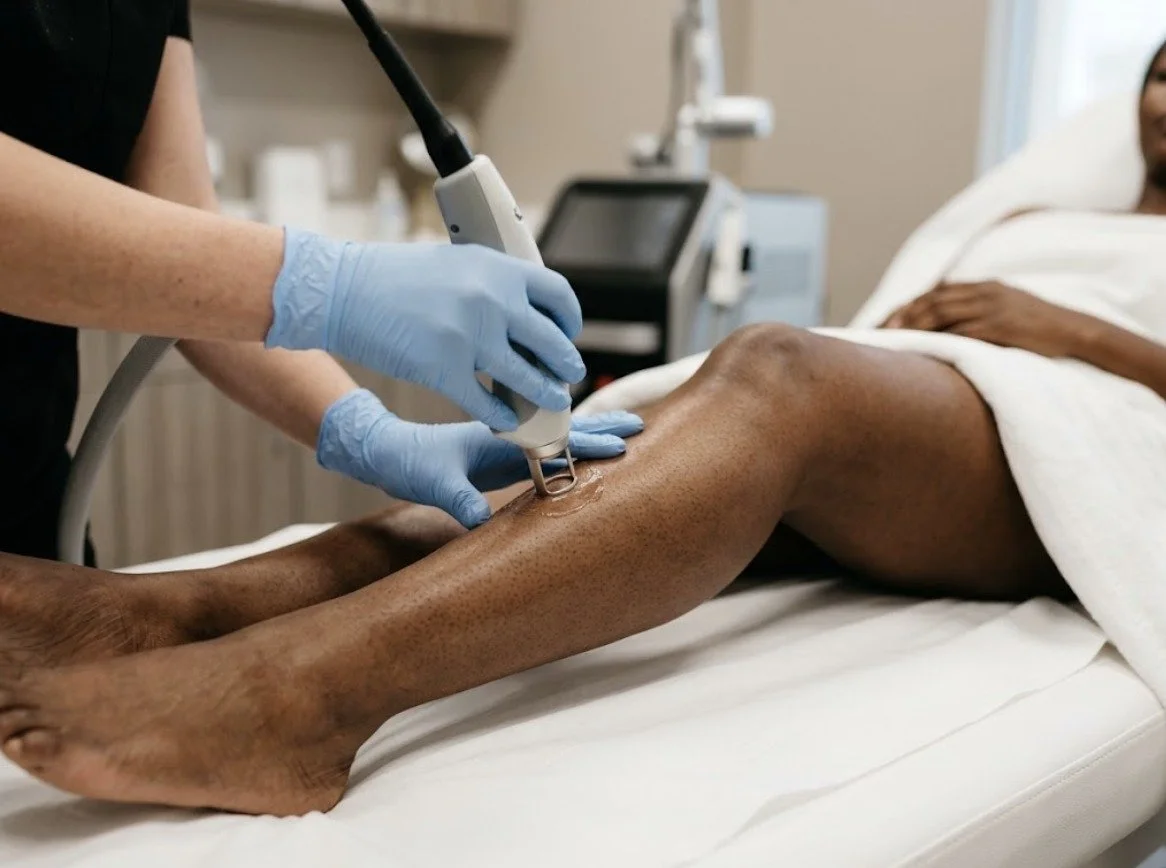
Concerns about burns, discoloration, and uneven results can make laser hair removal feel more complicated for people with brown or deeply pigmented skin. Those concerns are understandable because melanin affects how laser energy interacts with the skin.
Modern laser hair removal for dark skin can be a practical option when the provider chooses the right wavelength, treatment settings, cooling, and technique for your skin tone and hair type. At Bliss Medical Spa and Wellness in Glendale, AZ, treatment planning focuses on your individual skin and hair characteristics rather than using the same settings for every patient.
What You'll Learn From This Article
Why melanin changes the way laser hair removal should be performed
Which laser wavelengths are commonly considered for darker skin tones
What affects hair reduction and the number of sessions you may need
How treatment may help reduce shaving, waxing, and ingrown hair concerns
Which side effects deserve attention before booking
How to prepare for treatment and choose a provider in Glendale
Why Laser Hair Removal Works Differently on Darker Skin
Laser hair removal works by directing light energy toward pigment in the hair. That energy heats the hair follicle and can damage structures involved in future hair growth.
The challenge is that melanin is present in both the hair and the skin.
Melanin Is the Target and the Safety Consideration
Dark hair tends to contain more melanin, which gives the laser a clear target. Darker skin also contains more epidermal melanin, so some laser energy can be absorbed by the surrounding skin instead of the hair alone.
This is why skin tone matters when selecting a laser and determining treatment settings.
A review of laser treatment in darker skin explains that the competition between epidermal melanin and pigment in the hair follicle increases the importance of wavelength, pulse duration, and cooling. The same review notes that longer wavelengths generally interact less strongly with epidermal melanin than shorter wavelengths.
That does not mean darker skin should automatically be excluded from treatment. It means the procedure requires thoughtful planning based on skin type, pigmentation, hair characteristics, and the device being used.
Understanding that relationship between melanin and laser energy makes the next question easier to answer: which laser technologies are commonly chosen for darker skin?
Which Laser Technology Is Used for Darker Skin?
Hair removal lasers operate at different wavelengths, and each wavelength interacts with melanin differently.
That difference can influence how much energy reaches the hair follicle and how much is absorbed closer to the skin's surface.
| Laser Type | Approximate Wavelength | General Consideration |
|---|---|---|
| Alexandrite | 755 nm | Strong melanin absorption, often associated with lighter skin types |
| Diode | Around 800 to 810 nm | May be used across different skin tones with appropriate settings |
| Nd: YAG | 1064 nm | Lower epidermal melanin absorption, often considered for darker skin tones |
Why Nd: YAG Is Often Considered for Darker Skin
The 1064 nm Nd: YAG wavelength penetrates deeper and is absorbed less by epidermal melanin than shorter wavelengths.
That characteristic can make it useful when treating patients with darker skin.
One clinical study followed 59 women with Fitzpatrick skin types IV and V through six sessions using a long-pulsed 1064 nm Nd: YAG laser with contact cooling. Researchers reported progressive hair reduction without permanent adverse effects in that study group. Coarse terminal hairs generally responded better than finer intermediate hairs.
The Laser System Still Needs the Right Settings
Using an Nd: YAG wavelength does not automatically make every treatment appropriate or guarantee a particular result.
Energy level, pulse duration, spot size, cooling, treatment area, hair thickness, and skin pigmentation all matter.
Bliss Medical Spa and Wellness uses the Splendor X laser hair removal platform, which combines Alexandrite and Nd: YAG capabilities. That gives the treatment provider options when developing a plan around different skin and hair characteristics.
The laser itself is only one part of the equation. The next step is making sure the treatment parameters fit the person receiving the treatment.
What Makes Laser Hair Removal Safer for Dark Skin?

A careful consultation is especially important when your skin contains more melanin because small differences in skin tone, recent sun exposure, hair thickness, or pigmentation can affect treatment planning.
Your Skin and Hair Should Be Assessed First
Before treatment, a provider may review:
Your natural skin tone
Recent tanning or sun exposure
Hair color and thickness
The area being treated
History of hyperpigmentation or discoloration
Active irritation or inflammation
Medications or topical products that may affect skin sensitivity
Previous reactions to laser or light-based treatments
These details help the provider determine whether treatment is appropriate and which settings may be suitable.
Cooling and Treatment Parameters Matter
Providers can adjust laser hair removal settings in several ways, including fluence, pulse duration, spot size, and wavelength.
Cooling is also important because it helps protect the skin while energy reaches the follicle.
A provider may also choose to treat a small test area first when there is concern about how the skin may respond. That decision depends on the patient's skin tone, history, treatment area, and the provider's clinical judgment.
The goal is to affect the hair follicle while limiting unnecessary heat in the surrounding skin.
Once safety planning is in place, the next concern is usually results and how much hair reduction to expect.
Does Laser Hair Removal Work on Dark Skin?
Laser hair removal can reduce unwanted hair in darker skin tones, but results depend on more than skin color.
Hair thickness, hair color, body area, hormones, growth cycle, treatment consistency, and individual response can all affect the outcome.
Dark, Coarse Hair Often Responds More Readily
Laser technology depends on pigment inside the hair to absorb energy.
Dark, coarse hair generally provides a stronger target than very fine or lightly pigmented hair. Hair with little melanin may respond less predictably because the laser has less pigment to absorb.
Several Sessions Are Usually Needed
Hair follicles move through different growth stages, and only a portion of the hair is in an active growth phase at any given time.
That is why laser hair removal usually requires a series of appointments.
A 2022 study of patients with Fitzpatrick skin types IV and V compared two 1064 nm Nd:YAG pulse approaches and found significant terminal facial hair reduction after six treatment sessions.
The exact number of sessions varies by person. Treatment area, hair density, hair thickness, hormonal factors, and how the follicles respond all play a role.
Hair Reduction Is More Accurate Than Permanent Hair Removal
It is better to think of laser treatment as long-term hair reduction rather than guaranteed permanent removal.
Some hair may remain. Some follicles may recover over time, and new hair growth can also occur because of hormonal changes or other factors.
Maintenance sessions may be appropriate for some patients.
For many people, however, the appeal of treatment goes beyond hair reduction alone. Repeated shaving, waxing, and ingrown hairs can also affect the decision.
Laser Hair Removal, Ingrown Hairs, and Discoloration
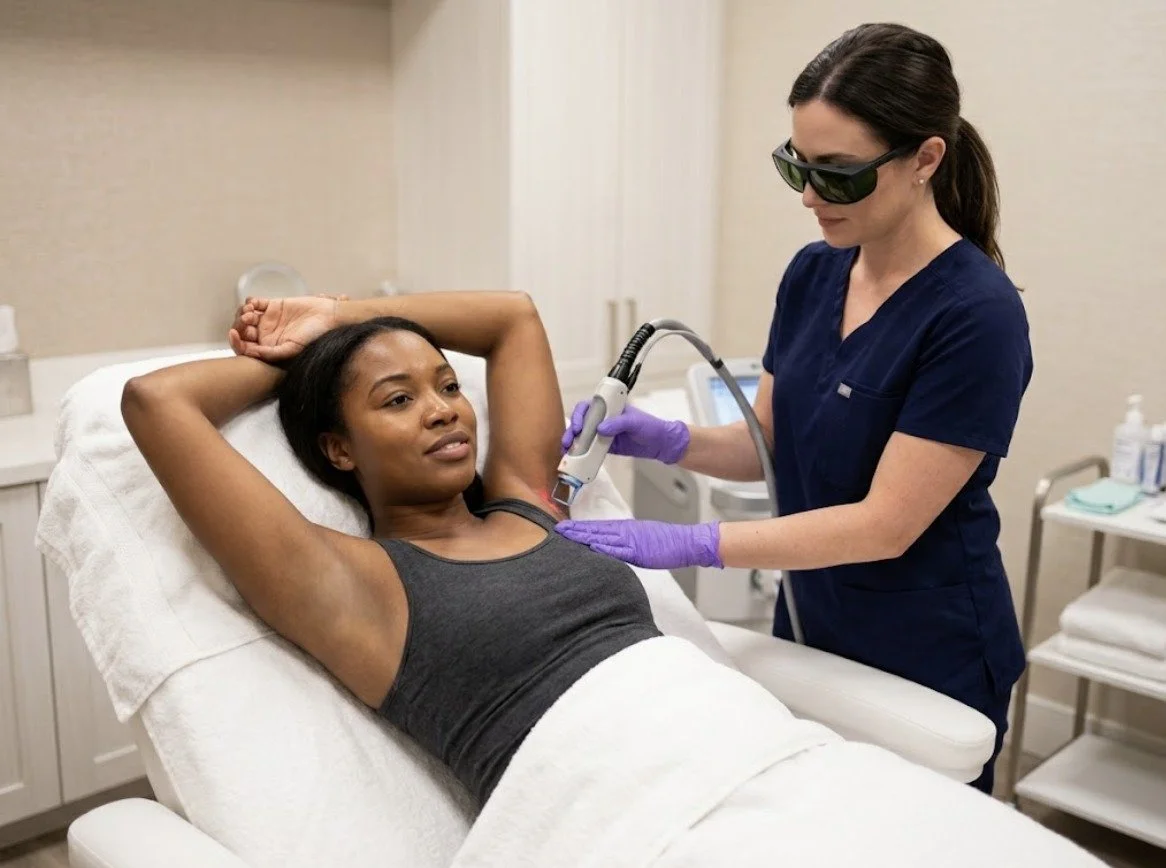
Frequent shaving and waxing can be time-consuming, especially in areas where hair grows quickly or tends to become ingrown.
For patients with darker skin, repeated inflammation may also contribute to visible pigmentation changes.
Can Laser Hair Removal Help With Ingrown Hairs?
An ingrown hair occurs when a hair grows back into the skin instead of emerging normally.
By reducing the amount and thickness of hair in a treated area, laser hair removal may decrease the number of hairs available to become ingrown.
Common treatment areas include:
Bikini line
Underarms
Chin
Beard and neck area
Legs
This does not mean laser treatment will remove every ingrown hair or correct every cause of skin discoloration.
What About Existing Hyperpigmentation?
Post inflammatory hyperpigmentation can follow acne, shaving irritation, ingrown hairs, or other inflammation.
Existing pigmentation does not always prevent laser treatment, but providers should assess it before the procedure. Darker areas may absorb more laser energy than surrounding skin, which can affect treatment planning.
Your provider may recommend delaying treatment in areas with active irritation, recent tanning, or significant inflammation.
That brings the discussion to the risks worth understanding before scheduling a treatment series.
Risks and Side Effects of Laser Hair Removal on Darker Skin
Laser hair removal is a medical aesthetic procedure, so temporary skin reactions and less common complications are possible.
Common short-term reactions may include:
Redness
Mild swelling around the hair follicles
Warmth
Tenderness
Temporary sensitivity
These effects often settle with time, but the duration can vary.
Pigment Changes Can Occur
Hyperpigmentation means the skin becomes darker. Hypopigmentation means the skin becomes lighter.
Both can occur after laser treatment, particularly if the skin absorbs more heat than intended.
Other less common complications can include blistering, burns, prolonged irritation, infection, or scarring.
This is why provider training, skin assessment, treatment settings, cooling, and aftercare all matter. No laser hair removal treatment is risk-free.
Knowing how to prepare can also reduce avoidable irritation and help create a more predictable treatment session.
How to Prepare for Laser Hair Removal
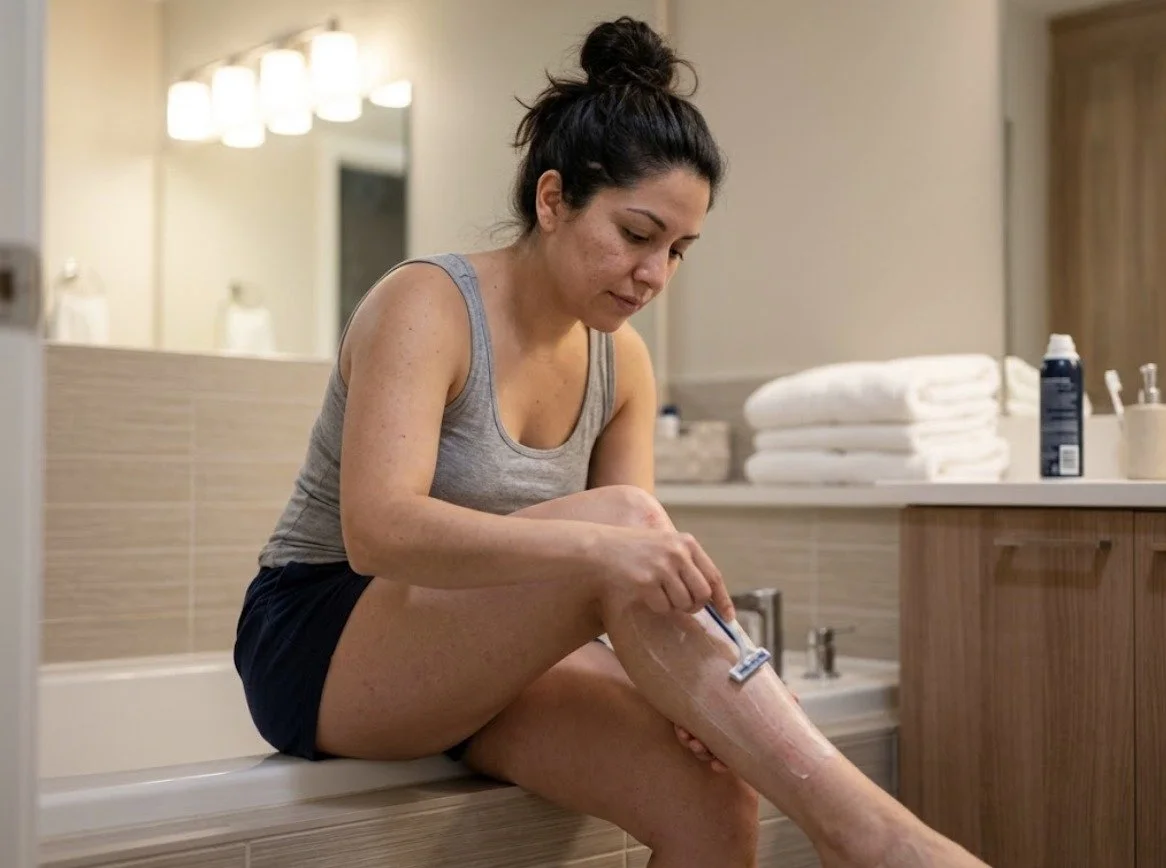
Preparation instructions may vary slightly by treatment area and your provider's protocol.
In general, laser hair removal works best when the hair follicle remains intact, and you avoid excessive skin irritation and recent tanning.
Before Your Appointment
Your provider may ask you to:
Avoid tanning and significant sun exposure before treatment
Report recent changes in pigmentation
Shave the treatment area as directed
Stop waxing, tweezing, or epilating before treatment
Discuss medications and skin products that may increase sensitivity
Wait to treat skin that is actively irritated unless it has been assessed
At Bliss, patients are advised to shave before treatment, limit sun exposure and tanning, and avoid waxing or tweezing the area before an appointment.
Why Shaving Is Different From Waxing
Shaving cuts hair at the skin's surface but leaves the follicle underneath.
That matters because the laser needs pigment within the hair and follicle to absorb the light energy.
Waxing and tweezing pull the hair out from the root, temporarily removing the target the laser needs.
After Treatment
Follow the aftercare instructions your provider gives.
You may be advised to avoid unnecessary heat, friction, or strong exfoliation for a period after treatment. Sun protection is also important, particularly for skin that may be more prone to pigmentation changes.
Contact your provider if you develop blistering, marked discoloration, worsening discomfort, or another reaction that concerns you.
Preparation is similar across many treatment areas, but the reasons people seek laser hair removal can differ depending on where the hair grows.
Common Laser Hair Removal Treatment Areas
Laser hair removal can treat many areas of the face and body.
Face and Chin
Coarse facial hair may lead to frequent shaving, tweezing, or waxing.
Laser hair removal may reduce hair density on the chin, upper lip, cheeks, jawline, or neck. If excess facial hair has an underlying hormonal cause, laser treatment addresses the hair itself, not the medical condition contributing to its growth.
Underarms
The underarms are a common treatment area for people who want to reduce frequent shaving or recurring irritation.
Bikini Line
The bikini line can be prone to ingrown hairs, razor irritation, and discoloration after inflammation.
Reducing coarse hair growth may lessen the need for repeated shaving or waxing, although results vary.
Legs, Arms, Chest, and Back
You can also treat larger areas such as the legs, arms, chest, and back.
Appointment time and the number of sessions can vary based on the area size, hair density, and hair thickness.
Once you know which area you want treated, choosing the right provider becomes one of the most important parts of the process.
Choosing Laser Hair Removal for Dark Skin in Glendale, AZ
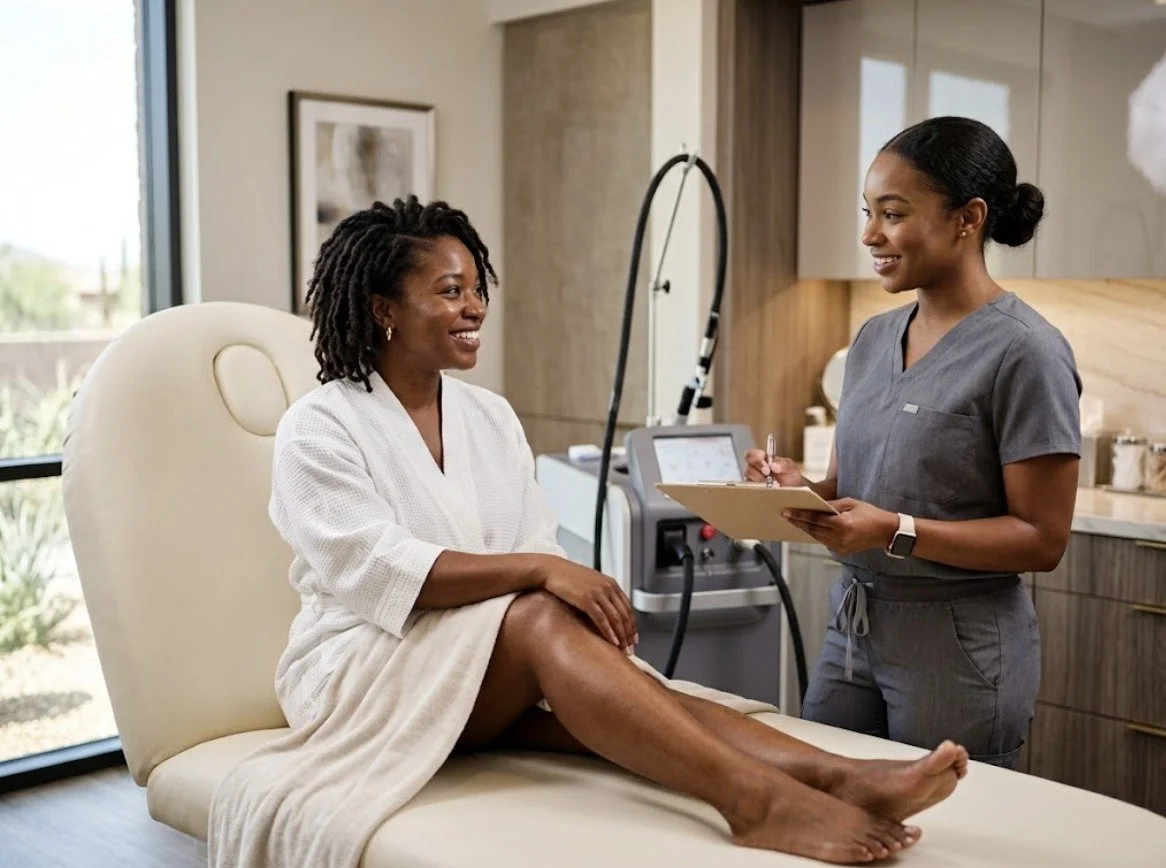
A consultation should help you understand not only what treatment is being recommended, but why it is appropriate for your skin tone and hair type.
Useful questions to ask include:
What laser system will you use for my skin tone?
Which wavelength do you recommend?
How do you choose the treatment settings?
How often do you treat patients with darker skin tones?
What type of cooling does the system use?
What temporary reactions should I expect?
Would you recommend a test spot for my skin?
How many sessions might I need?
Will my hair color or thickness affect the results?
What should I do before and after each appointment?
At Bliss Medical Spa and Wellness in Glendale, our team considers skin tone, hair type, treatment area, and patient goals before developing a laser hair removal plan.
The Splendor X system gives our providers access to both Alexandrite and Nd: YAG wavelengths, allowing them to adjust treatment decisions based on individual characteristics.
A good consultation should leave you with a clear idea of what the procedure involves, what results may be realistic, and which precautions apply to your skin.
Frequently Asked Questions
-
Providers can perform laser hair removal on darker skin tones when they use appropriate technology, treatment settings, cooling, and patient selection. Risks can include irritation, burns, hyperpigmentation, and hypopigmentation, so an individual consultation is important.
-
The 1064 nm Nd: YAG wavelength is commonly used for darker skin because it has lower epidermal melanin absorption than shorter wavelengths. The right laser and settings still depend on your skin tone, hair characteristics, and treatment area.
-
Yes. Hyperpigmentation is a possible side effect, particularly when too much heat affects surrounding pigmented skin. Hypopigmentation can also occur. Careful settings, cooling, sun protection, and proper patient selection may help reduce risk.
-
There is no fixed number for everyone. Most patients need a series of treatments because hair follicles grow in different cycles. Hair density, hair thickness, treatment area, hormones, and individual response can all affect the number of appointments.
-
It may. Reducing hair amount and thickness can lower the number of hairs that become ingrown, particularly in areas that are frequently shaved or waxed. Results vary, and laser treatment does not guarantee that all ingrown hairs or existing discoloration will disappear.
Laser Hair Removal for Dark Skin Requires an Individual Approach
Laser hair removal has become an option for a wider range of skin tones as laser technology and treatment protocols have improved.
For darker skin, the key considerations are straightforward: melanin matters, wavelength matters, settings matter, and provider judgment matters.
Dark, coarse hair often responds more readily than fine or lightly pigmented hair. Several sessions are usually needed, and results should be discussed as hair reduction, not guaranteed permanent removal.
If you are considering laser hair removal for dark skin in Glendale, AZ, schedule a consultation with Bliss Medical Spa and Wellness. We can evaluate your skin tone, hair characteristics, and treatment goals, then discuss an approach that fits your individual needs.