
Laser Treatment for Face Hair: Get Smooth Skin in Glendale, AZ

Facial hair can turn into a routine you never planned to have. Shaving the chin before work, threading the upper lip every few weeks, or repeatedly tweezing stubborn hairs can take time and irritate sensitive facial skin.
For people who want to reduce that ongoing maintenance, laser treatment for face hair offers another option. Laser hair removal targets pigment within the hair and transfers heat toward the hair follicle, reducing its ability to produce future hair growth. Rather than removing hair only at the skin's surface, treatment addresses the follicular structures responsible for growth.
At Bliss Medical Spa & Wellness in Glendale, AZ, we can plan facial laser hair removal around your skin, hair characteristics, and personal goals. Understanding how the treatment works, what results are realistic, and what safety precautions matter can help you decide whether it belongs in your long-term skin care routine.
What You’ll Learn From This Article
In this guide, you’ll learn:
How laser treatment for face hair targets unwanted hair
Which facial areas and hair types may respond best
Who may be a good candidate for facial laser hair removal
What to expect during a treatment session
How many sessions you may need and why they are spaced weeks apart
How to prepare for treatment and care for your skin afterward
Potential side effects, safety considerations, and treatment limitations
How laser hair removal compares with shaving, waxing, threading, and tweezing
How Does Laser Treatment for Face Hair Work?
Laser hair removal relies on a process known as selective photothermolysis. In simpler terms, the laser delivers light at wavelengths that are absorbed by melanin, the pigment found in hair.
According to the National Library of Medicine's overview of laser hair removal, melanin within the hair shaft and surrounding structures absorbs the laser energy. The energy converts to heat and spreads to structures within the hair follicle that produce new hair.
The goal is to damage the hair follicles enough to reduce their ability to produce future hair growth while limiting injury to the surrounding skin.
This differs from shaving, which cuts hair above the skin, or waxing and tweezing, which physically pull hairs from their follicles. Laser treatment targets the structures associated with hair production.
Treatment does not affect every follicle equally at every appointment. Hair grows in cycles, and laser energy works most effectively during specific stages of hair growth. That is why facial laser hair removal usually requires a series of treatments rather than one.
Which Facial Areas and Hair Types Respond Best?
Common areas for facial laser hair removal can include the:
Upper lip
Chin
Jawline
Sideburn area
Cheeks
Neck or beard line
Whether treatment works well depends partly on the hair's characteristics.
Because laser hair removal targets melanin, dark, coarse hair generally responds more readily than very light or fine hair. The contrast between dark hair and light skin historically produced especially favorable conditions because more laser energy could be absorbed by the hair pigment while less was absorbed by the surrounding skin.
That does not mean laser hair removal is limited to people with light skin. Different laser technologies and treatment parameters can suit different skin tones. Choosing the right technology, energy settings, and cooling measures becomes especially important when the skin contains more melanin.
Facial hair also presents some distinct challenges. A review on challenges in facial laser hair reduction discusses how factors such as hair thickness, skin type, hormonal conditions, and treatment parameters can influence response.
Very fine hairs contain less pigment for the laser to target. White and gray hair also tends to respond poorly because it contains little or no melanin.
Who Is a Good Candidate for Facial Laser Hair Removal?
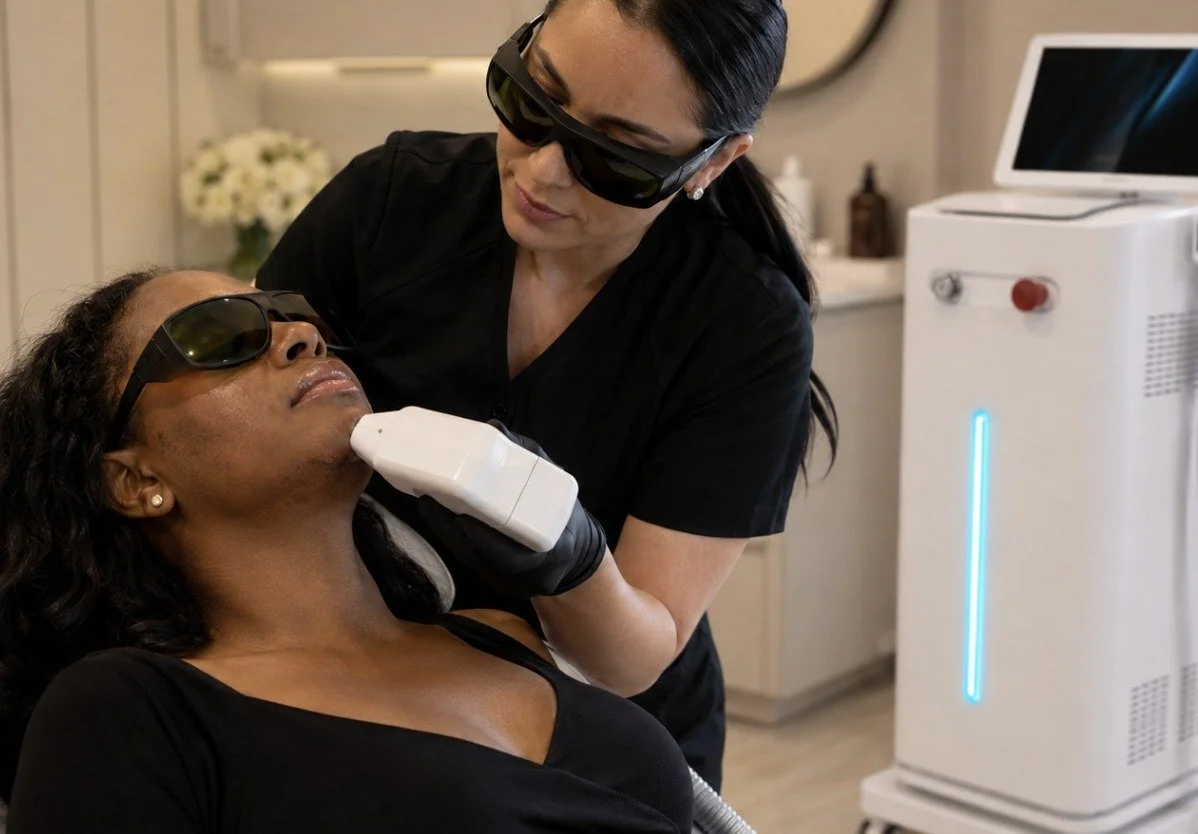
No single profile defines an ideal facial laser hair removal patient. A consultation should consider both your hair and your skin before treatment begins.
Your provider may assess factors such as:
Hair color, thickness, and density
Skin tone
Areas you want treated
Recent tanning or sun exposure
Medications and supplements
Previous laser treatments
Skin sensitivities or active conditions
Previous waxing, tweezing, or other hair removal
Hormonal or medical factors that may influence hair growth
The National Library of Medicine recommends evaluating both hair and skin type when choosing laser parameters. It also notes that hormonal status can affect treatment outcomes.
Hormones deserve particular consideration with facial hair. Changes in androgen activity and some medical conditions can contribute to increased facial hair growth. Laser treatment may address visible hair, but it does not necessarily address why new hair is developing.
If facial hair has appeared suddenly, increased significantly, or occurs with other new symptoms, it may be worth discussing those changes with an appropriate medical provider. Laser hair removal should not replace medical evaluation when an underlying health concern is suspected.
Research also continues to examine treatment across different skin tones. A 2024 study on diode laser treatment for facial hair reduction evaluated women with darker Fitzpatrick skin types and reported significant facial hair reduction during the study period, supporting the importance of selecting treatment parameters for the individual patient.
What Happens During a Facial Laser Hair Removal Appointment?

A good laser treatment starts before the first pulse.
Your provider should first evaluate the treatment area and review information relevant to safe treatment, including your skin type, hair characteristics, medications, recent sun exposure, and previous hair removal.
During treatment, the skin is prepared, and you wear protective eye equipment. The laser handpiece then delivers controlled pulses across the selected treatment area. Treatment parameters based on your skin, hair, and the technology used.
What does it feel like?
Sensations vary by person and by treatment area. Facial laser hair removal may feel warm, prickly, or briefly sharp. People often compare each pulse to the snap of a small rubber band against the skin. Depending on the treatment system, providers may use cooling technology or other comfort measures.
Calling laser hair removal painless would be misleading. Most people experience some sensation, although the intensity can vary considerably.
After the session, the treated area may look slightly red or feel warm. Mild swelling around individual follicles can also occur and may be an expected short-term response.
At Bliss Medical Spa & Wellness, we personalize treatment recommendations rather than using a one-size-fits-all approach. The goal of the consultation is to determine what best fits your skin, hair, and aesthetic priorities.
How Many Laser Hair Removal Sessions Does Facial Hair Need?
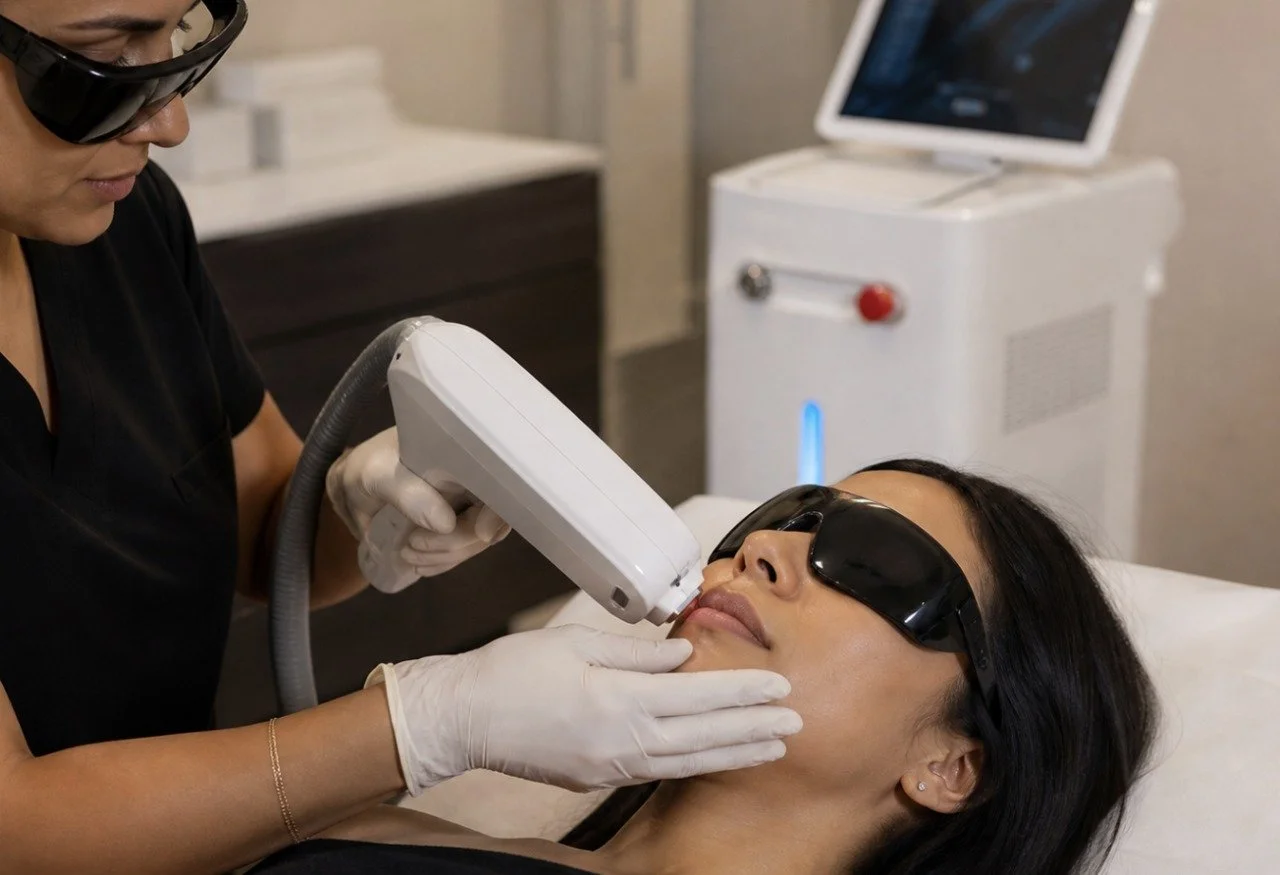
One of the most common misconceptions about laser hair removal is that one session should remove all unwanted hair.
Hair does not grow continuously at the same rate. Individual follicles move through different phases of the hair growth cycle. Laser energy has its strongest effect when a hair is in the active growth, or anagen, phase.
Because only a portion of the follicles are in that phase during any one appointment, multiple treatments are usually necessary. Your schedule may differ based on facial area, hair growth pattern, response, hormonal influences, skin characteristics, and the system used.
It is also important to understand what happens later.
Laser hair removal is better described as long-term hair reduction rather than guaranteed permanent hair removal. Some hair may eventually grow back. Regrowth may be finer or less dense, but results vary. Maintenance treatments may help some patients over time.
Facial hair influenced by ongoing hormonal activity may require particular attention to maintenance.
How to Prepare for Facial Laser Hair Removal and Protect Your Skin Afterward
Good preparation can affect both treatment response and skin safety.
Before treatment, your provider may ask you to avoid waxing, plucking, or tweezing for several weeks. These methods pull the hair from the follicle, removing the pigmented target that the laser needs.
Shaving is different. It removes visible hair above the skin without pulling the follicular target out. Follow your provider's specific shaving instructions rather than guessing when or how closely to shave.
Sun exposure also matters.
Laser energy targets pigment, and tanning increases pigment in the skin. The National Library of Medicine recommends sun protection before and after laser hair removal and identifies skin pigment as an important factor when choosing treatment parameters.
That advice is particularly practical in Glendale, where strong Arizona sun can make UV protection part of treatment planning year-round.
After your appointment:
Follow the skin care instructions your treatment professional provides.
Use appropriate sun protection.
Avoid unnecessary irritation to the treated area.
Avoid excessive heat or other activities if your provider advises it.
Do not pick at irritated skin.
Contact the clinic if you experience a reaction that seems more intense or persistent than expected.
Tell your provider about medications, photosensitivity, recent tanning, and recent skin treatments before your laser session.
Is Laser Treatment for Face Hair Safe? Side Effects and Limitations
Laser hair removal has been studied extensively, but it is still a cosmetic procedure with potential side effects.
Common temporary reactions can include redness, warmth, mild pain, burning sensations, and swelling around treated follicles. These effects often occur shortly after treatment.
Less common complications can include:
Blistering
Crusting
Changes in skin pigmentation
Scarring
Eye injury if proper eye protection is not used
Paradoxical hair growth in rare cases
Provider assessment matters because safe laser treatment requires more than simply selecting an area and turning on a device.
Laser Hair Removal vs. Shaving, Waxing, Threading, and Tweezing
No single hair removal method fits everyone. The main differences involve how the hair is removed, how frequently you need to repeat the process, and whether the method affects future growth.
| Hair Removal Method | How It Works | Main Consideration |
|---|---|---|
| Shaving | Cuts hair at the skin surface | Requires regular upkeep as hair grows |
| Waxing | Pulls hair from the follicle | Temporary removal and repeated appointments |
| Threading or tweezing | Physically removes individual hairs | Useful for small areas but requires continued maintenance |
| Laser hair removal | Uses light energy to target pigmented follicular structures | Requires a treatment series but may provide long-term hair reduction |
The National Library of Medicine lists shaving, waxing, plucking, electrolysis, chemical depilatories, laser systems, and intense pulsed light among approaches used for unwanted hair. Laser and light-based systems differ because they aim to reduce future hair production rather than simply removing the hair that is currently visible.
For someone tired of frequent shaving, waxing, or threading, that difference may make laser treatment worth considering.
Frequently Asked Questions About Laser Treatment for Face Hair
These are some of the most common questions patients have when considering facial laser hair removal.
-
Laser hair removal can produce long-term hair reduction, but you shouldn't expect permanent removal of every hair. Some follicles may produce hair again, and new hair can also develop over time. Some people may need maintenance treatments.
-
It can. Modern laser systems and appropriate treatment parameters can make laser hair removal possible for a wider range of skin tones. Because darker skin contains more melanin, choosing the right technology and settings is especially important. Research has documented facial hair reduction in patients with darker Fitzpatrick skin types.
-
Results are generally less predictable when hair contains very little pigment. Laser hair removal depends on melanin absorbing light energy, so dark hair typically provides a better target. Gray and white hairs may contain too little melanin to respond effectively to conventional laser hair removal.
-
You may be instructed to shave before treatment, but follow the timing your treatment professional provides. Shaving keeps the follicular target in place, while waxing, plucking, and tweezing remove the hair from the follicle and can interfere with laser targeting.
-
Cost varies by facial area, the number of sessions recommended, and your individual treatment plan. A consultation is the best way to receive current pricing based on the area and goals you want addressed.
Facial Laser Hair Removal in Glendale Starts With the Right Treatment Plan
Laser treatment for face hair can reduce unwanted growth and decrease the need for frequent temporary hair removal, but good results depend on more than the laser itself.
Hair color, hair thickness, skin tone, growth cycle, hormonal influences, treatment timing, technology, and individualized settings can all affect how someone responds. Medical guidance also emphasizes realistic expectations because laser hair removal is designed for lasting reduction, not a guarantee that every treated hair will disappear permanently.
If you are considering facial laser hair removal, schedule a consultation with Bliss Medical Spa & Wellness in Glendale, AZ. Our team can assess your skin and hair characteristics, answer your questions, and discuss a treatment plan that fits your goals and expectations.