
Microneedling for Face in Glendale, AZ: How to Get Firm Skin
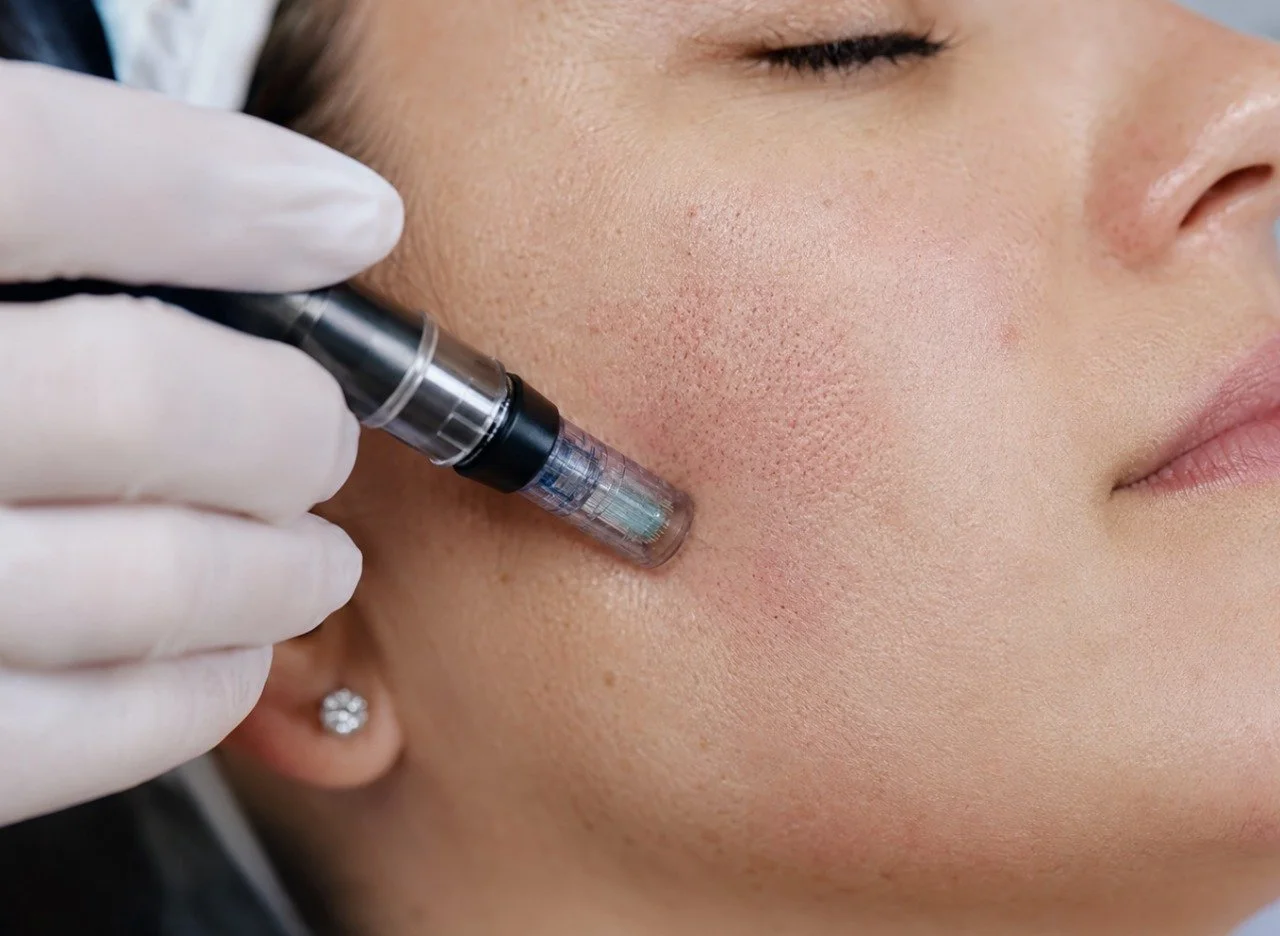
Fine lines can become more noticeable. Old acne scars may seem deeper. Skin that once looked smooth and firm can gradually begin to feel less supported.
For people who want to improve these concerns without surgery, microneedling for face may be an option worth discussing with a qualified provider. Microneedling uses tiny needles to create controlled microchannels in the skin. These small injuries trigger a natural repair response that includes collagen and elastin production.
The result isn't an instant facelift. Instead, the goal is gradual improvement in skin texture, fine lines, certain acne scars, and the appearance of mild skin laxity as the skin rebuilds itself.
At Bliss Medical Spa & Wellness in Glendale, AZ, microneedling can be considered as part of a personalized skin care plan based on your concerns, skin condition, and treatment goals.
What You'll Learn From This Article
How professional microneedling stimulates collagen production
Which facial skin concerns may respond to treatment
How microneedling may improve the appearance of firmness
What happens during a professional treatment
What redness, downtime, and aftercare may look like
Why some patients need more than one session
When microneedling may not be appropriate
How Does Microneedling Work on the Face?
Microneedling is sometimes called collagen induction therapy because it uses controlled skin injury to start a repair process.
A professional microneedling device contains very small needles that move across the treatment area. The needles create microscopic channels in the skin without removing large areas of tissue.
The body responds to these controlled injuries by starting its normal wound-healing process. Cells called fibroblasts produce structural proteins, including collagen and elastin.
A recent review of the physiological effects of microneedling describes collagen and elastin production as important parts of this response. Over time, this remodeling may contribute to smoother texture, improved elasticity, and a firmer-looking surface.
Microneedling does not physically pull loose skin upward during treatment. The changes develop gradually as new collagen forms and existing tissue reorganizes.
Understanding that process helps explain why microneedling is often used for more than one type of facial concern.
What Skin Concerns Can Facial Microneedling Address?
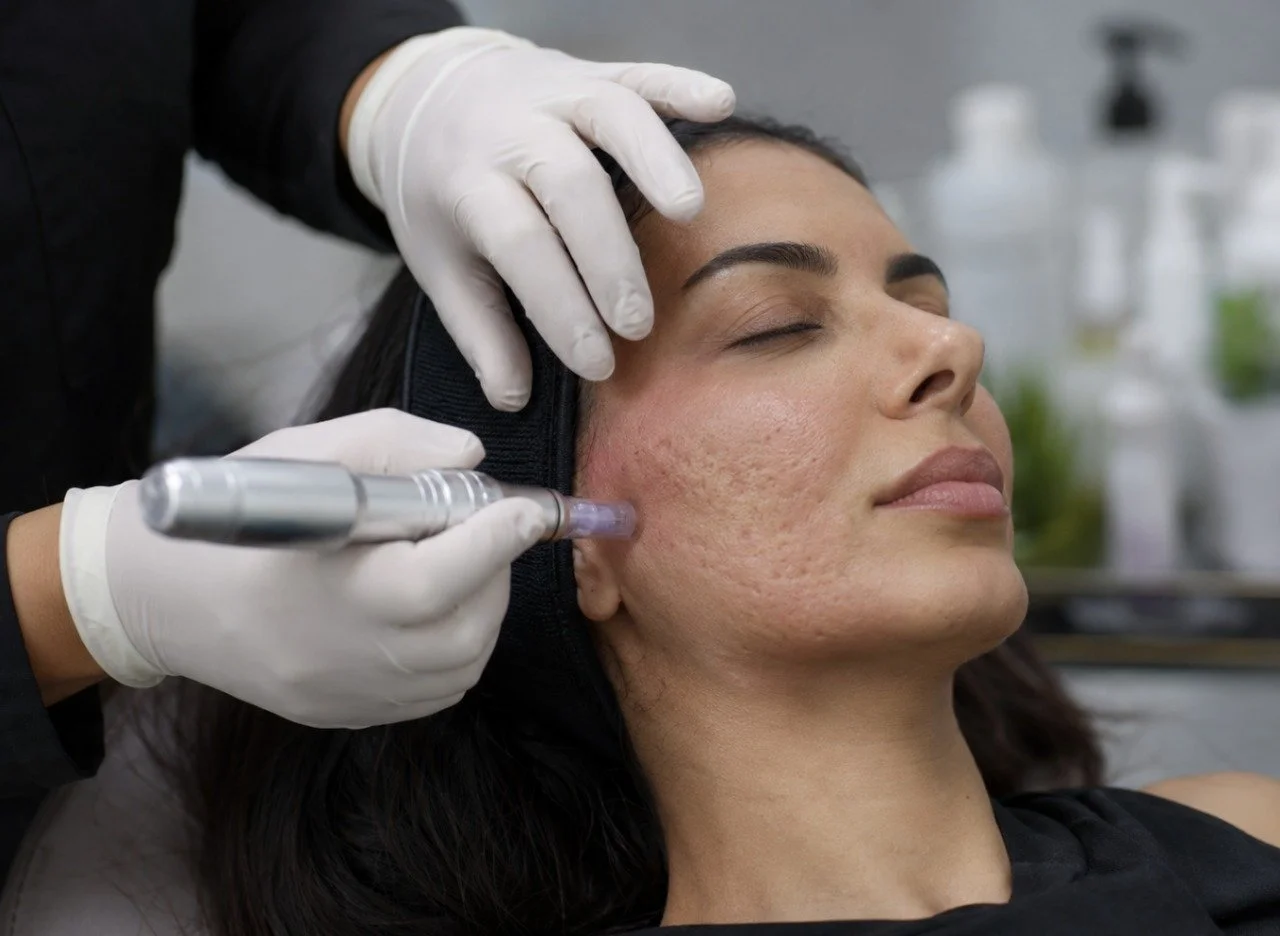
Microneedling is often considered for concerns related to texture, scarring, and early signs of skin aging.
Common treatment goals may include:
Fine lines and wrinkles
Uneven skin texture
Atrophic acne scarring
Certain surgical scars
Enlarged-looking pores
Mild changes in skin firmness
General facial rejuvenation
Microneedling has also been studied for stretch marks, pigmentation concerns, scars, and hair loss. Treatment approaches and supporting evidence vary by condition.
Fine Lines and Uneven Skin Texture
Collagen naturally changes with age, sun exposure, and other factors. As structural support decreases, fine lines and uneven texture can become more noticeable.
Microneedling may improve the appearance of these concerns by encouraging collagen production below the skin's surface. Results tend to appear gradually rather than immediately after treatment.
Acne Scarring
Microneedling may also help with certain forms of acne scarring.
Rolling scars and some boxcar scars may respond better than deep ice pick scars. Deeper scars may need another treatment or a combination approach.
It is also important to separate acne scars from active acne. A provider may recommend postponing microneedling if inflammatory acne is present in the treatment area.
Because different concerns respond differently, the next question is whether collagen induction can make facial skin look firmer.
Does Microneedling for Face Help Firm the Skin?
Microneedling may help the skin appear firmer, but realistic expectations matter.
Collagen provides structural support within the skin, while elastin contributes to elasticity. Microneedling stimulates the processes that produce and reorganize these proteins.
As remodeling continues, some people may notice smoother-looking skin, greater support, or fewer visible fine lines. These changes usually develop over time.
Microneedling is not the same as a surgical face lift. It also should not be expected to correct significant loose skin. Someone with mild changes in firmness may have different treatment options than a person with more advanced laxity.
Your response can depend on several factors, including:
Age
Baseline skin quality
Degree of skin laxity
Treatment depth
Number of sessions
Sun exposure
Skin care habits
Individual healing response
A consultation can help determine whether your goal fits what microneedling can reasonably address.
| Question | What to Know |
|---|---|
| Does microneedling instantly tighten the face? | No. Collagen remodeling takes time. |
| Can it help fine lines? | It may soften their appearance as the skin remodels. |
| Can it improve acne scars? | Certain atrophic scars may respond, but scar type matters. |
| Is one treatment always enough? | No. A series may be recommended depending on your goals. |
| Is there downtime? | You may experience redness, sensitivity, swelling, dryness, or flaking. |
Knowing what microneedling can realistically do makes it easier to understand what a professional appointment involves.
What Happens During a Professional Microneedling Appointment?
A microneedling appointment should begin with an assessment, not with the device.
At Bliss Medical Spa & Wellness, treatment planning can be based on your skin concerns, medical history, current skin care routine, and desired outcome.
Consultation and Skin Assessment
Before treatment, your provider may ask about:
Active acne or skin irritation
Previous cosmetic procedures
Prescription medications
Retinoids or other topical products
History of cold sores
Scarring history
Current skin care routine
Your main treatment goals
This information helps your provider decide whether microneedling is appropriate and how to perform the treatment.
Preparing the Skin
The provider cleanses the treatment area before the procedure. The provider may apply a topical numbing product to make treatment more comfortable.
Once the skin is prepared, the provider moves the microneedling device across selected areas of the face.
Needle depth may vary depending on the treatment goal and the part of the face being treated. Skin thickness varies across facial areas, so professional depth control matters.
The goal isn't to create the deepest possible treatment. The goal is to create an appropriate controlled response for the concern being addressed.
After the appointment, the way you care for your skin becomes an important part of the treatment process.
What Does Microneedling Recovery Look Like?
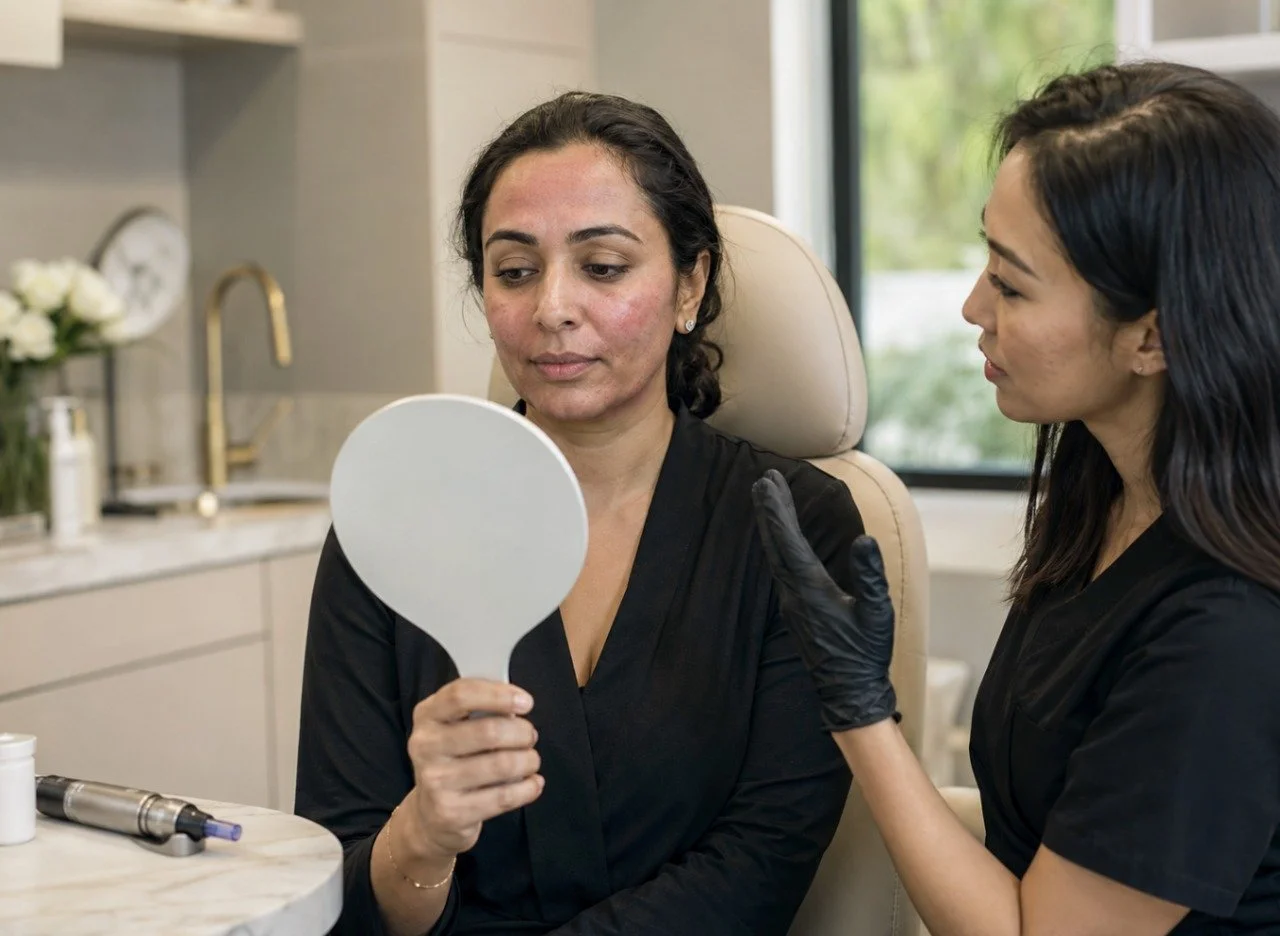
Microneedling is minimally invasive, but it still creates controlled injury in the skin. Some recovery is expected.
Your face may look pink or red shortly after treatment. It may also feel warm, tight, or sensitive. Mild swelling can occur.
During the next few days, you may notice:
Redness
Dryness
Mild flaking
Temporary sensitivity
A tight feeling
Mild swelling
Clinical guidance on microneedling describes redness, mild swelling, and scaling among commonly reported temporary effects.
Downtime varies by person and by treatment intensity. Don't assume your skin will look completely normal the next day.
Skin Care After Microneedling
Your provider will give you specific instructions based on your treatment.
General recommendations may include using gentle skin care, avoiding picking or peeling, and temporarily pausing products that can irritate newly treated skin.
Sunscreen is especially important after microneedling. This matters year-round in Glendale and the Greater Phoenix area, where strong sun exposure is common.
You may also receive instructions about when to restart retinoids, acids, exfoliating products, makeup, or other topical products.
Follow the aftercare plan your treatment professional provides rather than immediately returning to your regular skincare routine.
Once the initial redness settles, the next stage is less visible. Collagen remodeling continues beneath the surface.
When Will You See Microneedling Results?
Microneedling results are usually gradual because collagen production does not happen overnight.
Some people notice that their skin looks refreshed once the initial redness resolves. More meaningful changes in texture, fine lines, or acne scarring may take longer.
Collagen remodeling can continue for several months after treatment. This is why providers often evaluate progress over time instead of judging treatment based on the first few days.
Depending on your skin concern, providers may recommend a series of treatments.
Research on microneedling for acne scars has shown that repeated treatment sessions are often needed, rather than assuming one appointment is sufficient for every patient.
How many sessions you need can depend on:
What you want to improve
The severity of the concern
Treatment depth
How your skin responds
Your provider's treatment plan
A person seeking general skin rejuvenation may have a different schedule from someone treating established acne scars.
Because the outcome depends partly on technique and treatment depth, professional microneedling is different from using a roller at home.
Professional Microneedling vs At-Home Microneedling
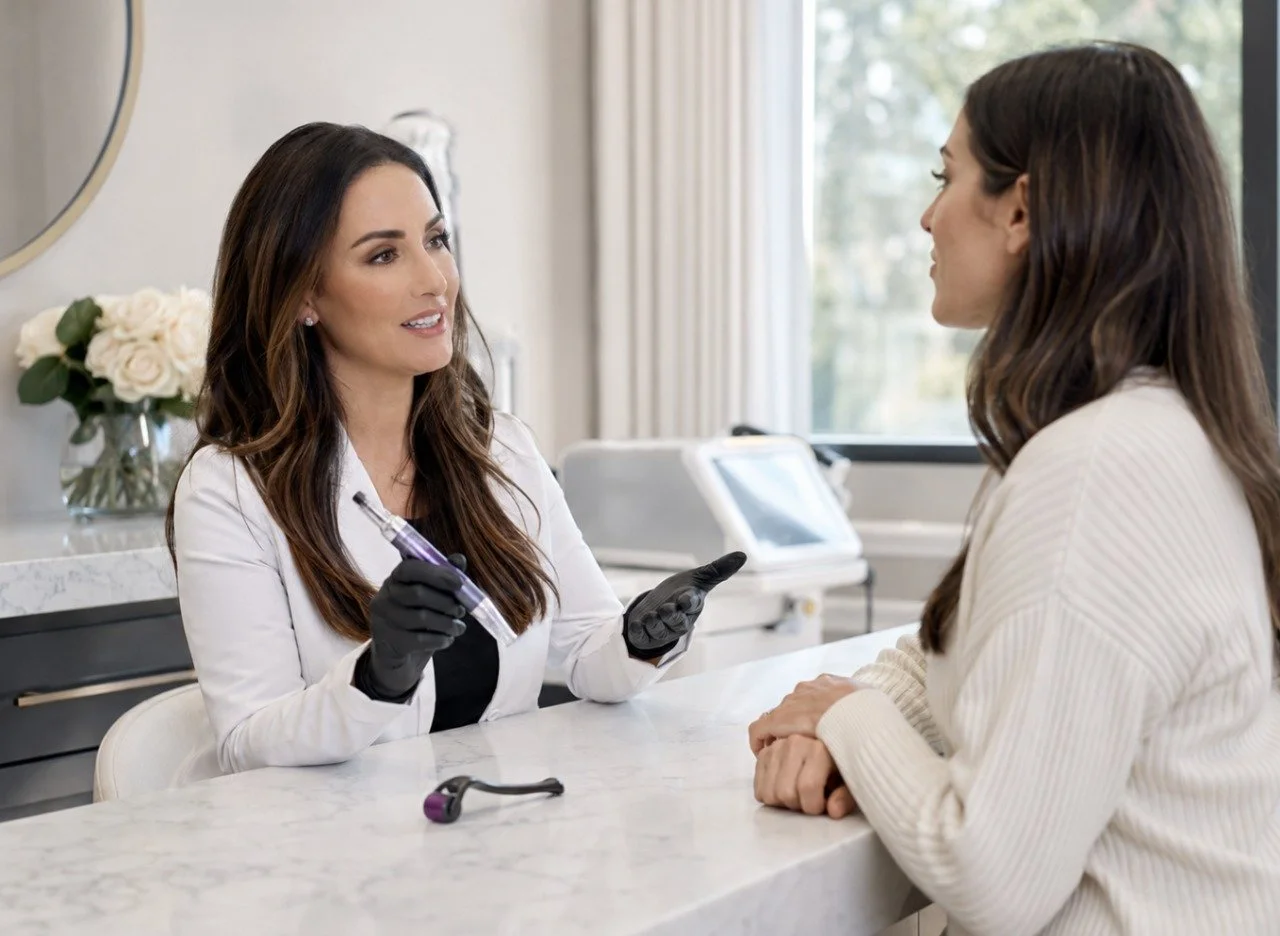
At-home rollers and professional microneedling devices may appear to work on the same basic idea, but they are not equivalent.
Professional treatment allows the provider to assess your skin first, choose an appropriate needle depth, adjust treatment across different facial areas, and follow infection control procedures.
An office-based appointment also gives your provider the chance to identify skin concerns that may make microneedling inappropriate.
At-home devices usually use shorter needles and cannot provide the same level of treatment customization.
Trying to create deeper microinjuries at home can increase the risk of problems if the device isn't clean, the technique is too aggressive, or the skin shouldn't have been treated in the first place.
If your goal is to address acne scarring, wrinkles, or a significant texture concern, professional evaluation is a safer starting point than trying to reproduce an office procedure yourself.
That assessment also helps identify situations where you should delay or avoid microneedling.
Who Should Avoid or Postpone Facial Microneedling?
Microneedling is not appropriate for every person or every skin condition.
A provider may recommend delaying or avoiding treatment if you have concerns such as:
Active inflammatory acne
An infection in the treatment area
An active cold sore
Active eczema or psoriasis
A strong tendency to form keloid scars
Certain immune-related conditions
Skin that is not healing normally
You should also tell your provider about current medications, prescription skin treatments, recent cosmetic procedures, and your history of abnormal scarring.
Do not stop a prescription medication on your own in preparation for a cosmetic treatment. Your prescribing clinician and treatment provider can tell you if any changes are necessary.
Skin tone is another reason professional assessment matters. Microneedling can be used across a range of skin tones, but your provider still needs to consider your individual pigmentation history, tendency toward post-inflammatory discoloration, and current skin condition.
Good candidacy involves more than simply wanting firmer-looking skin. It requires matching the treatment to your skin and your goals.
Frequently Asked Questions About Microneedling
-
Microneedling may help improve the appearance of mild skin firmness by supporting collagen and elastin remodeling. It does not physically lift loose skin and should not replace procedures designed to address significant skin laxity.
-
No single number applies to everyone. Your provider may recommend multiple sessions based on your treatment goal, skin condition, treatment depth, and response. Acne scarring may require a different plan than general skin rejuvenation.
-
Some changes may become noticeable within several weeks, while collagen remodeling can continue for months. Results usually develop gradually rather than appearing immediately after the appointment.
-
Microneedling may improve certain atrophic acne scars, especially rolling and some boxcar scars. Deeper scars may need another procedure or a combination treatment. Active inflammatory acne may be a reason to postpone microneedling until the skin is ready.
-
Downtime varies. Temporary redness, sensitivity, mild swelling, dryness, and flaking may occur for several days. Your provider can explain what to expect based on the treatment depth used and give you skin care and sunscreen instructions during recovery.
Is Microneedling for Face Right for You in Glendale, AZ?
Microneedling takes a gradual approach to facial rejuvenation.
The treatment creates controlled microchannels that stimulate processes involved in collagen and elastin production. As remodeling occurs, microneedling may improve the appearance of fine lines, certain acne scars, uneven skin texture, and mild changes in firmness.
It is not an instant tightening treatment, and results vary from person to person. The number of sessions, treatment depth, downtime, and final outcome depend on your skin and the concern being treated.
For patients comparing cosmetic treatments, the most useful first step is often identifying what you actually want to change. Microneedling may suit some concerns, while a chemical peel, laser treatment, facial, or another skin care option may make more sense for others.
If you are considering microneedling for face in Glendale, AZ, schedule a consultation with Bliss Medical Spa & Wellness. Our team can assess your skin concerns, discuss realistic expectations, and help you choose a treatment plan that fits your goals.