
Beyond Botox: Effective Ways to Tackle Crow's Feet
Understanding Crow's Feet and Your Treatment Options
Crow's feet treatment encompasses a range of options—from professional injectable procedures to at-home skincare—designed to reduce the fine lines radiating from the outer corners of your eyes. Here's what you need to know:
Quick Treatment Overview:
- Neuromodulators (Botox, Dysport, DAXXIFY): Relax muscles to smooth dynamic wrinkles; results last 3-6 months; typically requires 20-30 units
- Dermal Fillers: Plump static lines with hyaluronic acid; effects last 3-12 months
- Laser Resurfacing: Stimulates collagen production; results can last up to 10 years
- Chemical Peels: Exfoliate and regenerate skin; average cost around $650
- Topical Treatments: Retinol and peptide creams; results visible within 24 weeks
- Prevention: Daily SPF 30+, sunglasses, healthy diet, and proper skincare
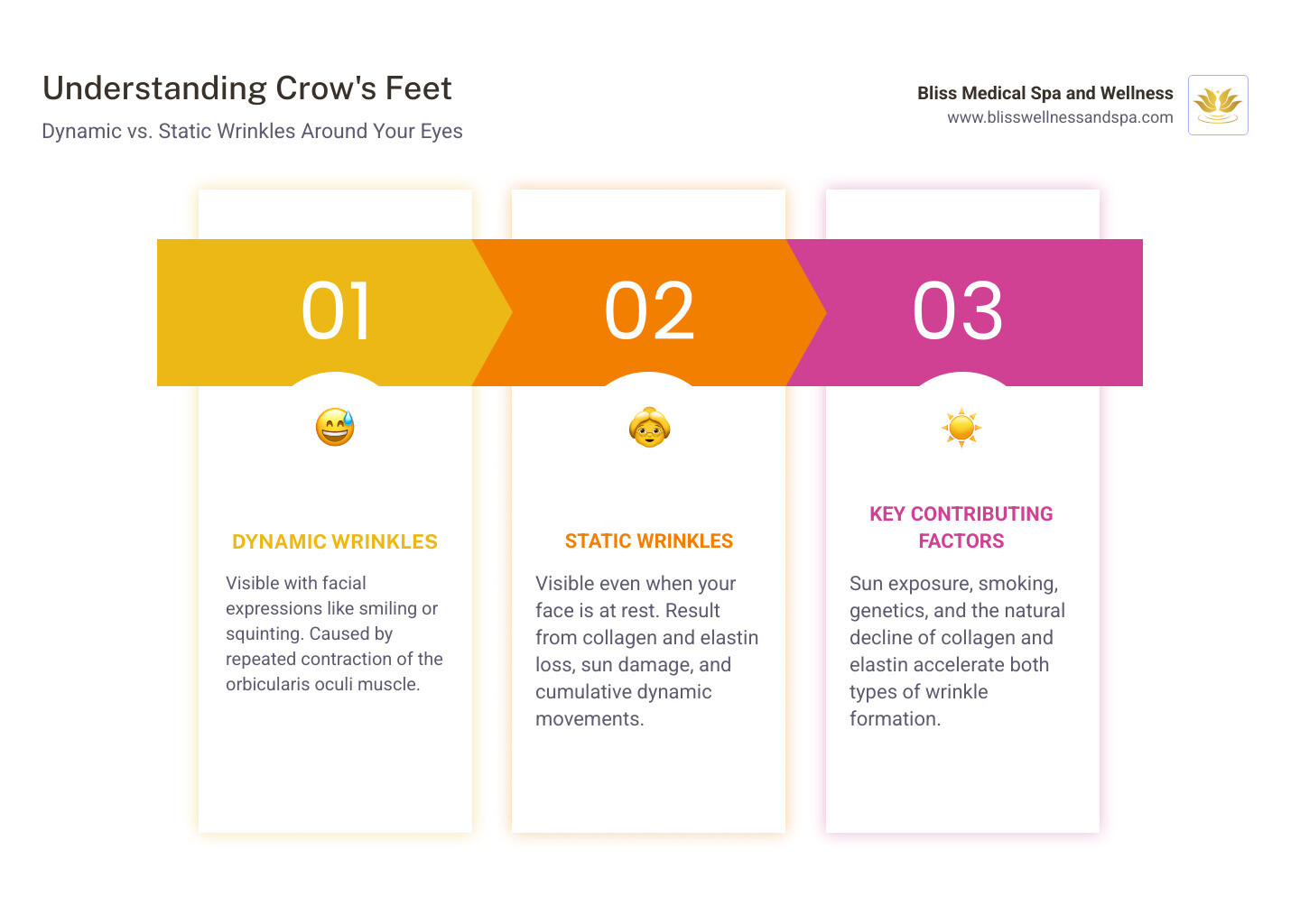
Those small lines at the corners of your eyes—often called smile lines—are one of the first signs of aging. As our skin loses elasticity and collagen, the delicate eye area becomes prone to wrinkles. Repeated muscle contractions from smiling or squinting create these periorbital wrinkles, which can be dynamic (appearing with expressions) or static (visible at rest).
In the sunny climate of Phoenix, Arizona, crow's feet can develop earlier due to intense UV exposure and the natural tendency to squint in bright sunlight. Residents of the greater Phoenix area, including Glendale, know this well. The good news is that modern aesthetic medicine offers many effective solutions, from in-office procedures to preventative home care.
I'm Dawn Dewane, a board-certified Family Nurse Practitioner with experience in aesthetic medicine. At Bliss Medical Spa and Wellness, I help clients at our Phoenix and Glendale locations find the right crow's feet treatment options to achieve natural-looking results and improve their overall wellness.
What Are Crow's Feet and Why Do They Form?
Crow's feet, medically known as lateral canthal rhytids, are the fine lines that fan out from the outer corners of your eyes. For many, they're a tell-tale sign of aging they'd prefer to minimize.
The skin around our eyes, or the periorbital region, is particularly delicate and thin, making it especially prone to showing signs of aging. This area has fewer oil glands compared to other parts of the face, which means it's naturally drier and less supple.
At the heart of crow's feet formation is the orbicularis oculi muscle, a circular muscle that surrounds your eye. Every time you smile, laugh, or squint, this muscle contracts. Over years of repeated contractions, these dynamic movements etch lines into your skin. Think of it like bending a paperclip back and forth; eventually, it weakens and retains its bent shape.
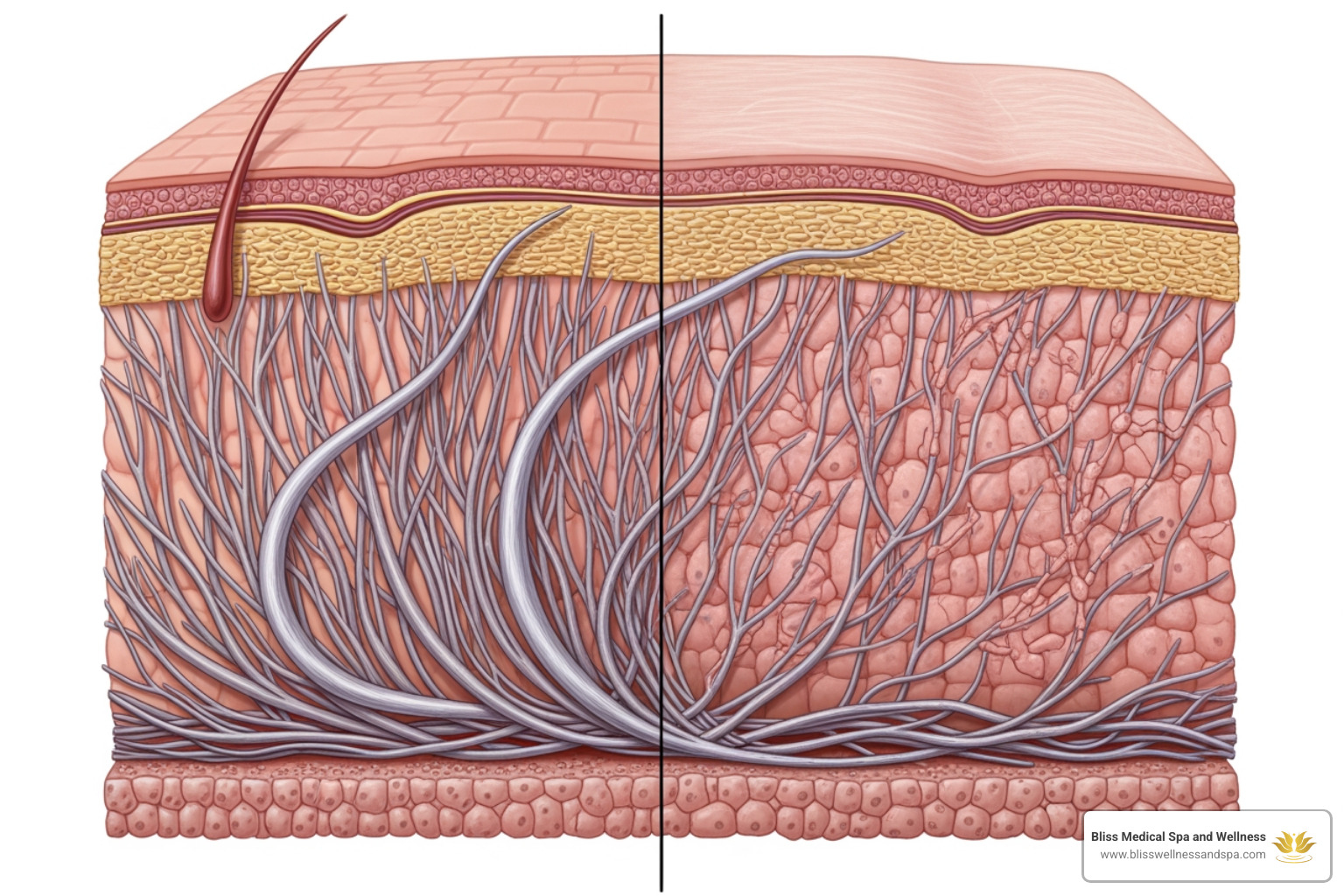
Beyond muscle movement, the natural aging process plays a significant role. As we get older, our bodies produce less collagen and elastin. Collagen provides structural support to our skin, while elastin gives it the ability to snap back into place. Starting in our 30s, we lose about 1% of our collagen each year. This gradual decline leads to thinner, less firm skin that struggles to retain its shape, making it easier for wrinkles to form. You can learn more about the science of skin aging and how these internal factors contribute to visible changes.
Environmental and lifestyle factors significantly accelerate this process, especially in Arizona. The abundant sunshine in Phoenix means increased UV exposure, a major culprit in premature aging. UV rays damage collagen and elastin fibers, leading to deeper wrinkles. The constant need to squint in the bright sun, a common reality for those in Phoenix and Glendale, also exacerbates the issue by repeatedly contracting the orbicularis oculi muscle. Smoking is another significant contributor, as it slows collagen production and damages skin cells.
We categorize crow's feet into two main types:
- Dynamic Crow's Feet: These are the lines that appear only when you make facial expressions, like smiling or squinting. They are directly caused by muscle contractions.
- Static Crow's Feet: These lines are visible even when your face is at rest. They develop when dynamic wrinkles become permanent due to prolonged collagen and elastin loss. Many people experience a combination of both.
When Do Crow's Feet Typically Appear?
The age at which crow's feet begin to show varies greatly, but generally, we start noticing them in our late twenties or early thirties. For some, depending on genetics and lifestyle, they might appear as early as their mid-20s, or not until their 40s.
Several factors influence this timeline:
- Genetics: Our genes play a significant role in how our skin ages. If your parents developed crow's feet early, you might too.
- Lifestyle Factors: Habits like sun exposure, smoking, diet, and hydration can accelerate or delay their appearance.
- Sun Damage: As we discussed, UV radiation is a prime accelerator of skin aging. Living in a sunny climate like Phoenix makes us particularly susceptible. Without adequate protection, sun damage can cause crow's feet to develop earlier and become more pronounced.
While they are a natural part of life, if they bother you, we have many effective crow's feet treatment options available. For more insights into when these lines typically begin to form, you can refer to resources like When laugh lines start to show.
Professional Crow's Feet Treatment Options
When at-home remedies aren't enough, professional crow's feet treatment offers powerful, lasting solutions. At Bliss Medical Spa and Wellness, we create personalized treatment plans custom to your unique skin and aesthetic goals.
We always recommend a consultation with a board-certified provider. We'll review your medical history, assess your skin, and evaluate your crow's feet (dynamic vs. static) to determine the most effective treatment. We'll also review before-and-after photos and set realistic expectations.

To give you a clearer picture, here's a comparison of the main professional treatments we offer for crow's feet:
| Treatment Type | Primary Mechanism | Best Use Case | Typical Longevity | Estimated Cost Range (Per Treatment) |
|---|---|---|---|---|
| Neuromodulators | Relaxes muscles to prevent contractions | Dynamic wrinkles | 3-6 months | $220 - $540 (20-30 units @ $11-$18/unit) |
| Dermal Fillers | Plumps skin with hyaluronic acid | Static wrinkles, volume loss | 3-12 months | Varies widely, often $600+ |
| Laser Resurfacing | Stimulates collagen, removes top layers | Static wrinkles, skin texture, tone | Up to 10 years | Around $799+ |
| Chemical Peels | Exfoliates outer skin layers, promotes regeneration | Fine lines, skin texture, tone | Varies (weeks to months) | Around $650+ |
Note: Costs are estimates and can vary based on individual needs, product used, and provider expertise.
Neuromodulators (Botox, Dysport, DAXXIFY)
Neuromodulators are one of the most popular and effective crow's feet treatment options, particularly for dynamic wrinkles. These injectables, such as Botox, Dysport, and DAXXIFY (which you can learn more about in our Wrinkle Relaxers: Botox, DAXXIFY, and Dysport blog), work by temporarily relaxing the muscles responsible for repetitive facial expressions.
The active ingredient is a purified form of botulinum toxin, which blocks nerve signals to specific muscles. For crow's feet, we strategically inject small amounts into the orbicularis oculi muscle. This prevents the muscle from fully contracting, smoothing existing lines and preventing new ones from forming. The U.S. Food and Drug Administration (FDA) has approved Botox for cosmetic use to treat crow's feet.
A typical treatment is quick, often taking only 15-30 minutes with no downtime. While some results are apparent within 24-48 hours, the full benefits usually develop over about 30 days.
For crow's feet, we typically use between 20 to 30 units of neuromodulator. The results generally last for 3 to 6 months. Many of our clients, particularly at our Phoenix location, find that regular maintenance treatments are key to sustained smoothness. Neuromodulators are best suited for individuals between 30 and 50, as they can also serve as a preventative measure.
We offer Neuromodulator treatments in Glendale, AZ and Neuromodulator treatments in Phoenix.
Dermal Fillers
While neuromodulators target dynamic wrinkles, dermal fillers address static crow's feet—lines that are visible even when your face is relaxed. Dermal fillers work by literally "filling in" these areas to restore lost volume.
The most common fillers contain hyaluronic acid (HA), a substance that naturally exists in your body. HA attracts water, which helps to hydrate and plump the skin, reducing the appearance of fine lines. Products like Juvéderm and Restylane are popular HA fillers.
The results of dermal fillers are often immediate, with minimal to no downtime. The effects usually last from 3 to 12 months, depending on the product used and how your body metabolizes it. While effective for static lines, fillers are generally not recommended for wrinkles directly under the eyes due to the risk of causing puffiness.
For more information on how dermal fillers can complement your crow's feet treatment plan, explore More info about our injectable services.
Laser Resurfacing
Laser resurfacing is a powerful crow's feet treatment that dramatically improves skin texture and tone. This technique uses concentrated light beams to remove damaged outer skin layers and stimulate your body's natural healing process, leading to new collagen production.
There are two main types of laser resurfacing:
- Ablative Lasers: These remove the outermost layers of skin and heat the underlying dermis, promoting intense collagen remodeling for significant skin tightening. They are highly effective but require more downtime.
- Non-Ablative Lasers: These heat the underlying skin tissue without removing the top layer. They are less invasive with less downtime, offering more subtle results.
Laser resurfacing also improves overall skin texture, reduces pigmentation, and tightens the skin. According to Research on ablative laser resurfacing, this process can significantly reduce aging signs. Initial healing can take 3-10 days, but the results can last up to 10 years. While the cost can be higher, often around $799 or more, the longevity makes it a worthwhile investment.
Chemical Peels
Chemical peels are another effective crow's feet treatment that works by exfoliating the skin to promote regeneration. A chemical solution removes damaged outer layers, revealing new, smoother skin with reduced fine lines and improved texture.
Chemical peels are classified by their depth:
- Superficial Peels: These use milder acids, like alpha hydroxy acids (AHAs), to target the outermost skin layer, improving brightness and fine lines with minimal downtime. They should be repeated every 2-4 weeks for best results.
- Medium-Depth Peels: These penetrate deeper and are more effective for moderate lines and sun damage. They involve a few days of downtime, with results lasting longer.
- Deep Peels: These use stronger chemicals for dramatic results on severe wrinkles but require significant downtime and must be performed by experienced medical professionals.
For crow's feet, superficial to medium-depth peels are generally recommended. The average cost is around $650 but varies by peel type. Deeper peels should always be performed in a healthcare provider's office to ensure safety.
At Bliss Medical Spa and Wellness, our team can guide you through the various options. To understand more about the environment and services available, explore What is a Med Spa?.
At-Home and Preventative Crow's Feet Treatment
A comprehensive approach to crow's feet treatment combines professional procedures with consistent at-home care. These preventative steps are crucial for maintaining results and slowing new lines, especially under the intense Phoenix sun.
Sun Protection is Paramount: This is arguably the most important preventative measure. UV radiation is a primary cause of premature aging and collagen breakdown.
- Daily SPF 30+: Apply sunscreen with an SPF of 30 or higher to all exposed skin, every single day.
- Wear Polarized Sunglasses: Sunglasses protect the delicate skin around your eyes from UV rays, and polarized lenses reduce glare, preventing you from squinting.
- Hats: A wide-brimmed hat provides an extra layer of protection.
Healthy Diet and Hydration: What you put into your body directly impacts your skin's health.
- Antioxidant-Rich Foods: A diet rich in fruits, vegetables, and nuts helps combat free radicals that damage skin cells.
- Stay Hydrated: Drinking plenty of water keeps skin plump, minimizing the appearance of fine lines.
How Topical Creams and Serums Can Help
Topical creams and serums are an accessible part of any crow's feet treatment regimen. They deliver active ingredients directly to the skin to improve its health and appearance.
Key ingredients to look for include:
- Retinol/Retinoids: These Vitamin A derivatives stimulate collagen production, reducing fine lines and improving skin texture. Prescription-strength retinoids are more potent, while over-the-counter retinol is gentler. Results are typically seen within 24 weeks.
- Peptides: These amino acid chains signal your skin to produce more collagen and elastin, helping to firm the skin and reduce wrinkles.
- Vitamin C: A powerful antioxidant, Vitamin C protects skin from free radical damage, brightens the complexion, and is essential for collagen synthesis.
- Niacinamide: Also known as Vitamin B3, niacinamide helps improve skin elasticity and strengthen the skin barrier.
A good quality eye cream with these ingredients can cost around $15 or more and should be part of your daily skincare regimen. For further reading on the efficacy of these products, you can refer to research on the effectiveness of topical creams.
Natural Remedies and Lifestyle Adjustments
Beyond targeted skincare, certain lifestyle adjustments can impact the severity of crow's feet:
- Quitting Smoking: Smoking slows collagen production and reduces oxygen flow to the skin. Quitting is one of the most impactful steps you can take to prevent new wrinkles.
- Silk Pillowcases: Sleeping on silk reduces friction on your delicate facial skin, helping prevent sleep lines from becoming permanent.
- Facial Exercises: Gentle facial exercises may help tone the muscles around the eyes and improve skin elasticity over time.
- Stress Management: Chronic stress leads to expressions like frowning that contribute to wrinkles. Practices like meditation can help relax facial muscles.
Incorporating these practices into your daily life can help limit the severity of crow's feet and keep your skin looking its best.
Your Treatment Journey: What to Expect
Understanding your crow's feet treatment journey—from procedure duration and cost to the longevity of results—is key. At Bliss Medical Spa and Wellness, we ensure you feel fully informed and comfortable with your choices.
Procedure Duration:
- Neuromodulators: Quickest, typically 15-30 minutes.
- Dermal Fillers: Also relatively fast, usually around 30 minutes.
- Chemical Peels: Can vary from 30 minutes for superficial peels to over an hour for deeper ones.
- Laser Resurfacing: Depending on the area and type of laser, treatments can range from 30 minutes to an hour.
Downtime:
- Neuromodulators: No downtime; resume activities immediately. Mild, temporary redness or bruising is possible.
- Dermal Fillers: Minimal downtime. Minor swelling or bruising may resolve within a few days.
- Superficial Chemical Peels: Little to no downtime, with possible mild redness and flaking.
- Medium-Depth Chemical Peels: A few days of redness, peeling, and sensitivity.
- Laser Resurfacing: Varies. Non-ablative lasers have minimal downtime, while ablative lasers can require 3-10 days for initial healing.
Longevity of Results:
- Neuromodulators: Results last 3-6 months. Regular treatments are needed for maintenance. You can learn more about how often to get Botox.
- Dermal Fillers: Effects last 3-12 months, depending on the product and your metabolism.
- Chemical Peels: Superficial peels require frequent repetition; medium-depth peels can last several months.
- Laser Resurfacing: Offers the most long-lasting results, potentially up to 10 years, by remodeling collagen.
Associated Costs: Costs for crow's feet treatment can vary widely based on the type of treatment, the number of sessions required, and individual factors.
- Neuromodulators: Priced per unit, typically ranging from $11-$18 per unit. With 20-30 units usually needed for crow's feet, a session could range from $220-$540.
- Dermal Fillers: Priced per syringe, often starting from $600 and going upwards, depending on the product and amount needed.
- Chemical Peels: An average cost for a chemical peel is around $650, varying with depth.
- Laser Resurfacing: Can be a higher initial investment, with treatments around $799 or more, reflecting the long-term results.
- Topical Creams/Serums: Can range from $15 for basic options to over $100 for high-end formulations.
Wondering about comfort? For injections, we use fine needles for a sensation many describe as a quick pinch. For other treatments, we use topical numbing creams to ensure a pleasant experience. You can learn more in our post, "Does Botox Hurt?"
When to Consult a Professional for Crow's Feet Treatment
While at-home care is great for maintenance, professional intervention offers superior results. Knowing when to seek expert advice can save you time and frustration. During a consultation, we will create a custom treatment plan that aligns with your aesthetic goals, ensuring natural-looking results.
We recommend consulting with a professional at Bliss Medical Spa and Wellness if:
- Static Lines Are Appearing: If your crow's feet are visible even when your face is at rest, this indicates deeper structural changes that topical products alone may not fully address.
- Over-the-Counter Products Aren't Delivering Desired Results: If you've been consistent with high-quality topical creams for months and aren't seeing the improvement you hoped for, a professional treatment is likely needed.
- You're Seeking Significant or Long-Lasting Improvement: For noticeable reduction in lines or results that last for months to years, professional treatments are designed to deliver these outcomes.
- You're Concerned About the Severity or Appearance of Your Crow's Feet: If your crow's feet are causing you to feel self-conscious, we encourage you to speak with us. Addressing cosmetic concerns can significantly improve your confidence.
- You're Considering Preventative Treatments: Many individuals in their late twenties or early thirties in Phoenix and Glendale start exploring preventative Botox to stop dynamic wrinkles from deepening into static lines. This is an excellent time to consult with us, as discussed in our guide, When to try Botox injections in Glendale, AZ.
Conclusion: Find Your Path to Smoother Skin in Arizona
Crow's feet are an inevitable part of life, often a testament to countless smiles. However, if these lines affect your confidence, a world of effective crow's feet treatment options awaits. From the muscle-relaxing power of neuromodulators and plumping effect of dermal fillers, to the skin-renewing capabilities of laser resurfacing and chemical peels, we have solutions for every need.
The key to successful treatment is a personalized approach. What works for one person may not be ideal for another, especially given the unique environmental factors we face in Phoenix. A professional consultation is invaluable for creating a safe, effective plan custom to your goals.
At Bliss Medical Spa and Wellness, we are dedicated to helping you find the best version of yourself. We believe in enhancing your well-being and confidence through top-tier, personalized self-care. Our expert team at our Phoenix and Glendale locations is ready to guide you through the exciting possibilities of modern aesthetic medicine.
Don't let crow's feet overshadow your radiant smile. We invite you to take the first step towards smoother, more confident skin.
Book a consultation for neuromodulators in Glendale, AZ or Phoenix today, and let us help you achieve the results you deserve.